


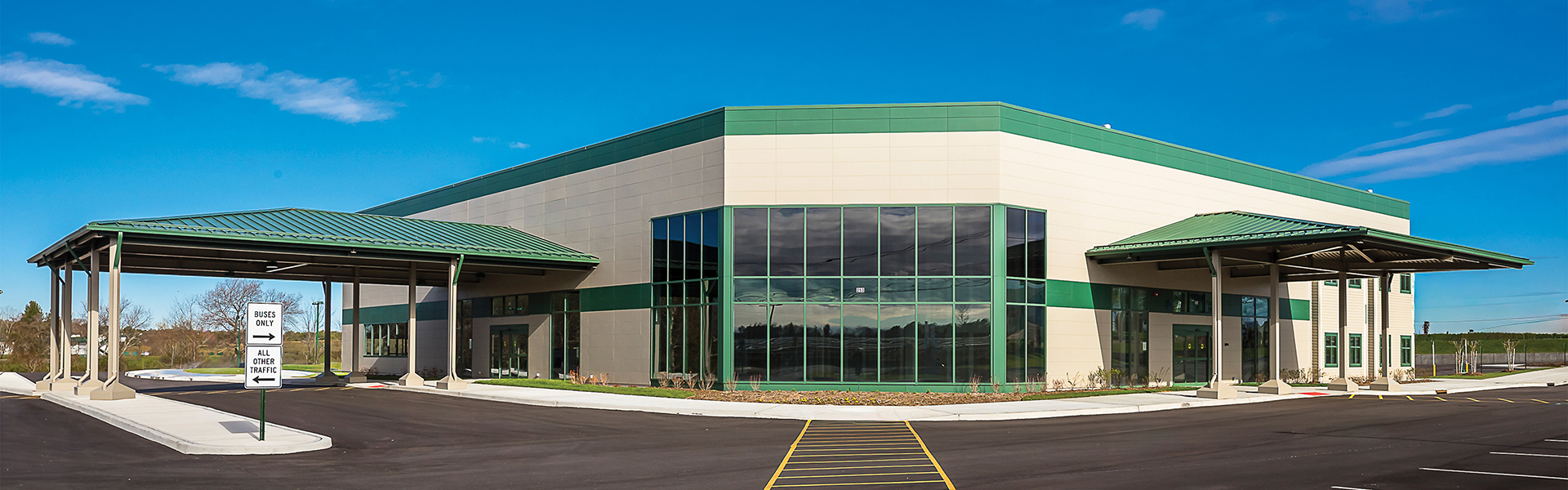
Hampton Jitney – Calverton Terminal
A transportation company expands operations with a purpose-built terminal and maintenance facility designed for clearspan efficiency and weathertight performance — all without compromising the passenger experience.


Project
Overview
Hampton Jitney began in 1974 as a small shuttle service created to solve transportation needs in the Hamptons.
As demand increased and service expanded across Long Island’s North Fork, company leadership recognized the need for a new terminal and maintenance facility in Calverton. The project was envisioned as a long-term operational anchor, designed to support peak season volumes of up to 1,000 passengers per day while reinforcing the premium expectations associated with the brand.
As owner Geoffrey Lynch explained, “We did our research before embarking on this project. We visited terminals in Quebec and Nashville, and we had more than 40 years’ worth of knowledge we applied when planning the new terminal.”


Over time, Hampton Jitney evolved into one of the region’s most recognizable luxury brands, defined by discipline, consistency and an uncompromising approach to passenger experience. From onboard hosts to a quiet, controlled environment, every detail reflects a service standard closer to first-class travel than conventional ground transportation.
Lynch, whose family acquired the business in the late 1980s, brought a deep understanding of daily operations to the project, having previously served in roles ranging from host to accountant. That experience shaped a facility designed around efficiency, durability and ease of use.
Reflecting on the process, he noted, “The building process, which took about 18 months, was the easy part. We worked with Radon Construction, a Butler Builder®. They were easy to work with, flexible and willing to work within our time frame. Our project manager, Craig Plansker, was really dedicated to this project — he basically became a Hampton Jitney employee while he was here.”
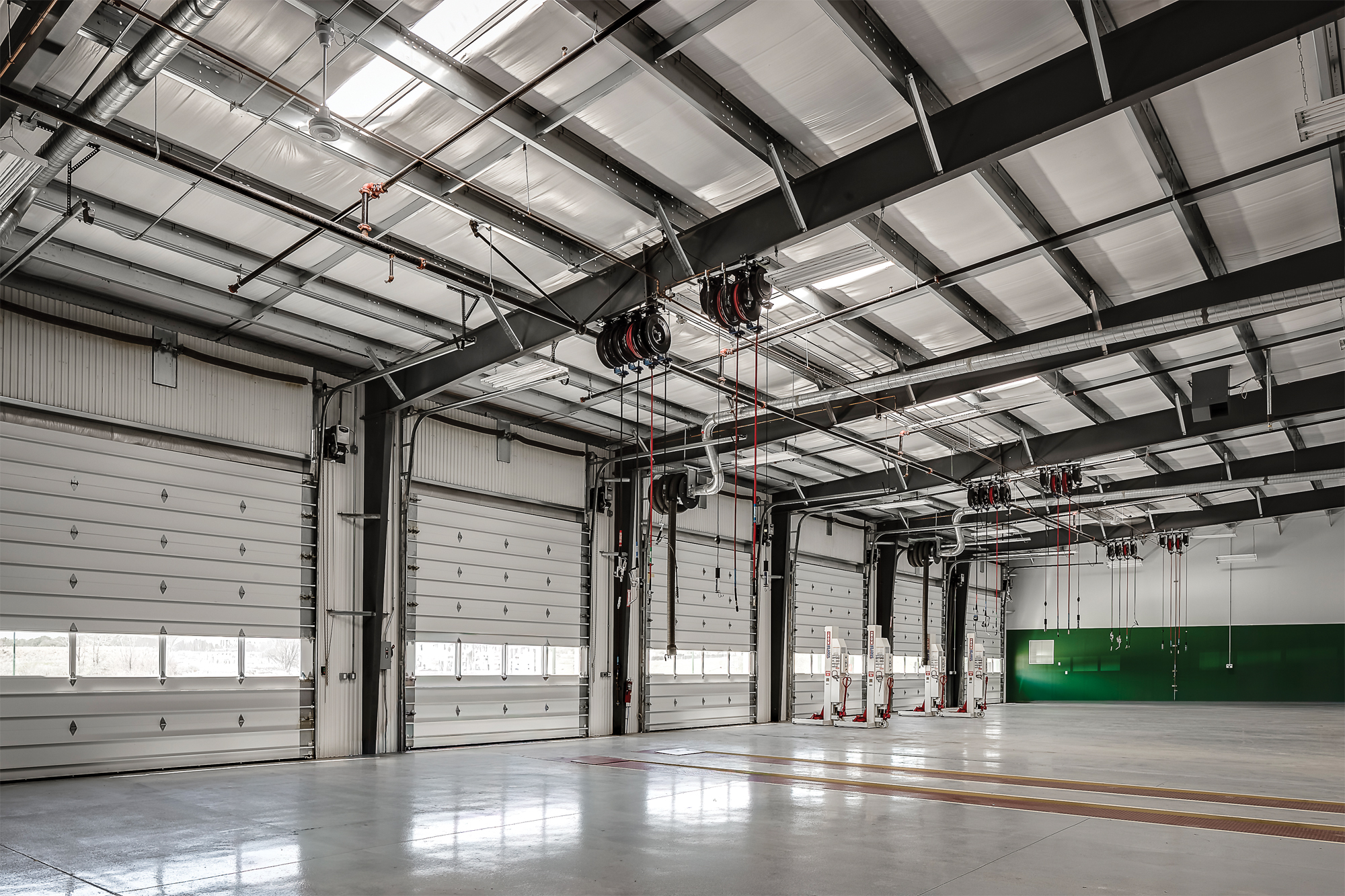
Throughout the design build process, Lynch collaborated closely with the project team to ensure the facility supported fleet movement and maintenance workflows without compromise. One of the primary goals was eliminating interior columns within the maintenance shop, recognizing that structural obstructions would hinder the maneuverability of motor coaches and reduce operational efficiency.
The building process, which took about 18 months, was the easy part. We worked with Radon Construction, a Butler Builder. They were easy to work with, flexible and willing to work within our time frame. Our project manager, Craig Plansker, was really dedicated to this project — he basically became a Hampton Jitney employee while he was here.
That requirement led to the use of a structural system that provided a clearspan solution with flexibility in building width, height and roof slope while still supporting the desired exterior appearance. Lynch remarked on the result, saying, “It was surprising that we could create a roof span without supports. Our shop is a wide-open span, which, for us, is a luxury.”
The completed facility includes seven maintenance bays and a wash bay, all free of interior support columns. The open layout allows multiple vehicles to be stored indoors during winter months, protecting assets from harsh weather while improving maintenance access and scheduling.
Given the coastal environment, roof performance was a critical consideration. The team selected the MR-24® roof system for its double-lock seam, staggered panel splices and interior-fastened roof curbs, creating a monolithic, weathertight surface engineered for long term reliability. To further enhance operational efficiency, the maintenance bays and parts room incorporate a daylighting system.
Beyond performance and efficiency, the facility was designed to meet the visual expectations of Hampton Jitney’s elite clientele. A hybrid structural approach enabled seamless integration between the clearspan maintenance area and the multistory passenger and office spaces while accommodating varied roof slopes and architectural detailing.
The finished structure combines the VSR II™ architectural roof system with the MR-24 roof, delivering both visual presence and proven performance. According to Craig Plansker, “We’ve heard from people who were surprised to learn that the Calverton Terminal is a metal building. It’s opened their eyes to the design possibilities and flexibility available with Butler building systems.”
With the Calverton terminal now in operation, Hampton Jitney is positioned to support continued growth with confidence. The facility delivers the operational efficiency, asset protection and architectural quality required to sustain a premium transportation experience as demand continues to rise.


