Woodinville Whiskey
A purpose-built whiskey processing and aging complex balances disciplined industrial function with material refinement. It delivers vast operational capacity, agricultural context and thoughtful detailing that supports growth and future experiential offerings.


Project
Overview
Woodinville Whiskey’s processing and barrel-aging facility in Quincy, Wash., represents a strategic commitment to long-term growth and operational performance for one of the Pacific Northwest’s most respected spirit brands.
Set on a 10-acre site surrounded by the grain fields that supply the distillery’s production, the multi-phase expansion consolidates key functions and provides space for continued development in processing, aging and future public engagement.
Built by Rimmer & Roeter Construction, Inc., a longtime Butler Builder®, and designed by Graham Baba Architects, the new complex anchors Woodinville Whiskey’s move to centralize production with precision and purpose.
The initial phase includes a processing and bottling building that also houses corporate offices and the first of several planned barrel rickhouses for aging whiskey. A second barrel rickhouse is under construction with four more planned in future phases.


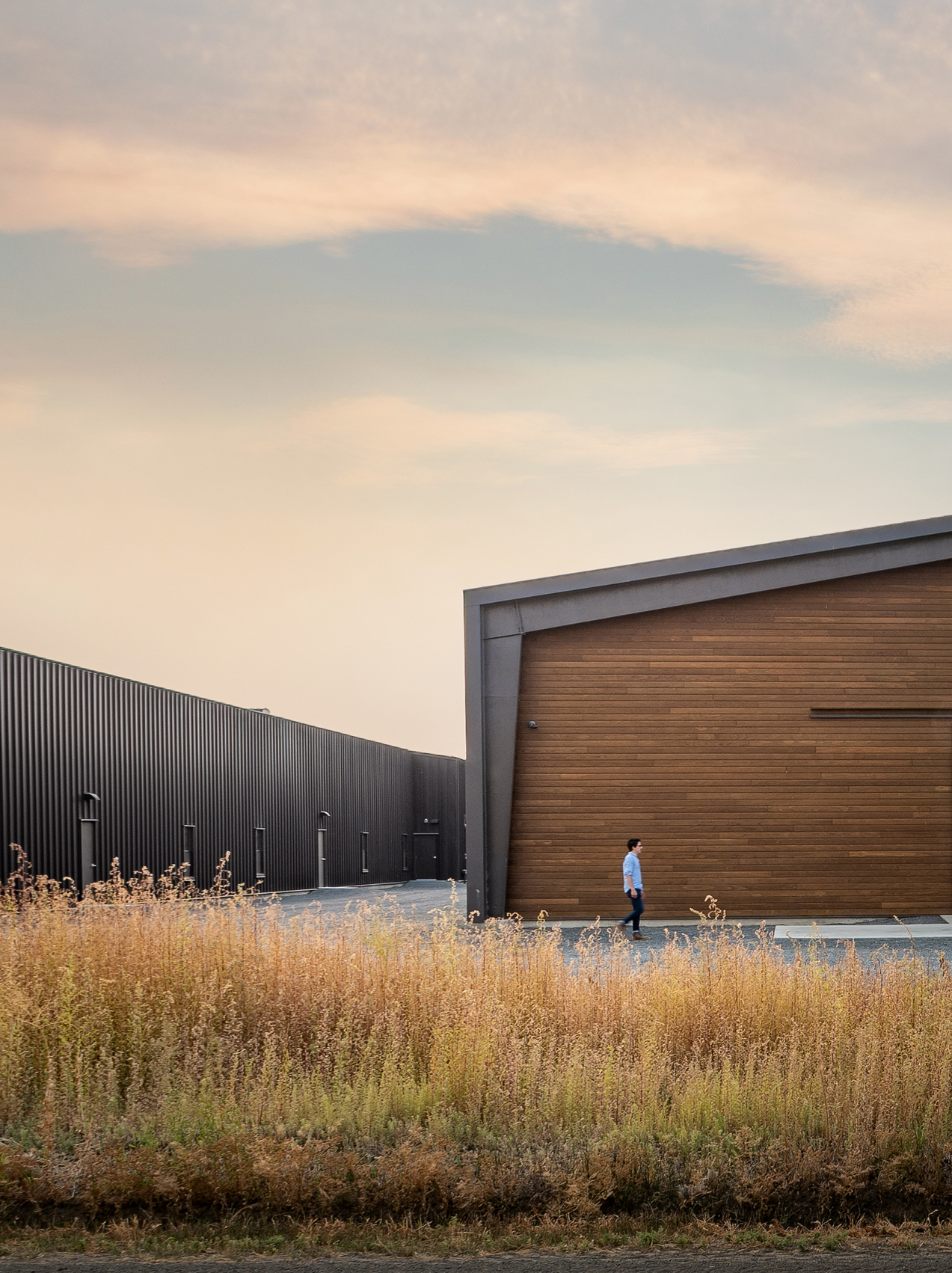
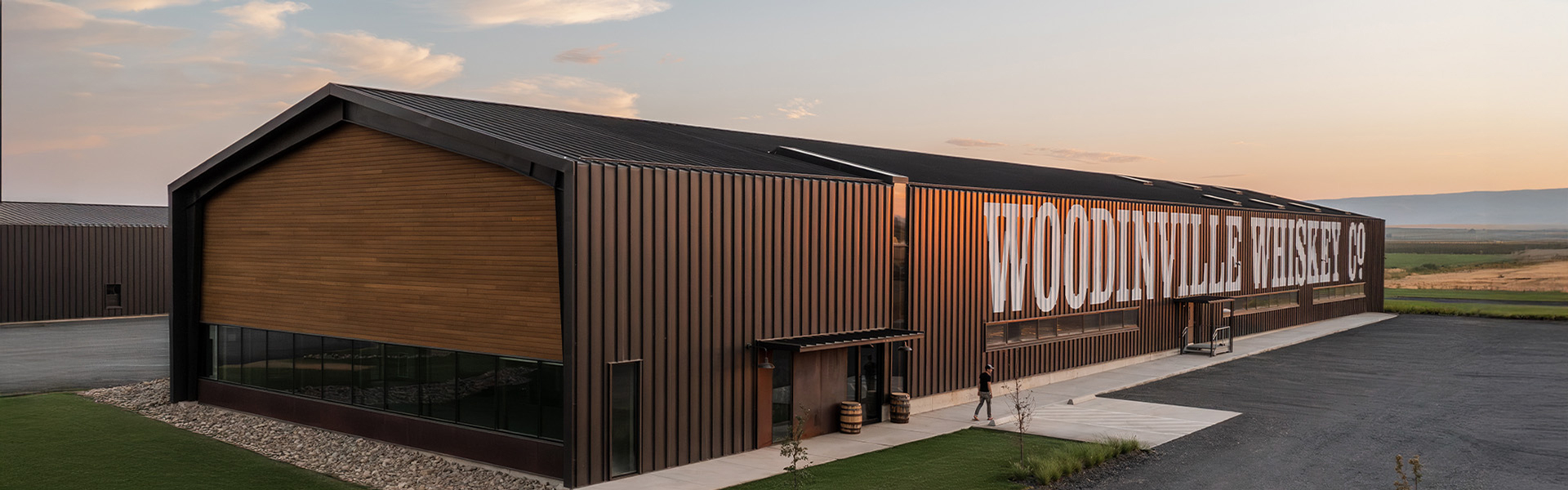
The scale of the buildings is deliberate. Ranging from roughly 40 to 70 feet wide and 400 feet long, they establish a commanding presence within the agricultural landscape while embodying architectural restraint inspired by regional agricultural and industrial warehouses as well as traditional whiskey ricking houses of the American South. This balance of scale and simplicity reflects the brand’s identity and the project’s functional demands.
From the outset, the design directive was clear: balance industrial performance with brand expression. The structures’ masses are organized by operational requirements such as vehicle circulation loading and unloading, a layout that reinforces efficiency without aesthetic compromise. The architectural forms are straightforward and disciplined, with gabled roofs and rectilinear profiles that support both workflow and visual coherence across the complex.
Building materials convey purpose and presence. Dark metal siding and Kebony wood cladding reference both the original Woodinville distillery and the iconic material palette of American whiskey heritage. Large corten-clad sliding barn doors and bands of corten siding at strategic locations evoke warmth and character, signaling the facility’s function to those who work there and to visitors who will eventually explore the site.
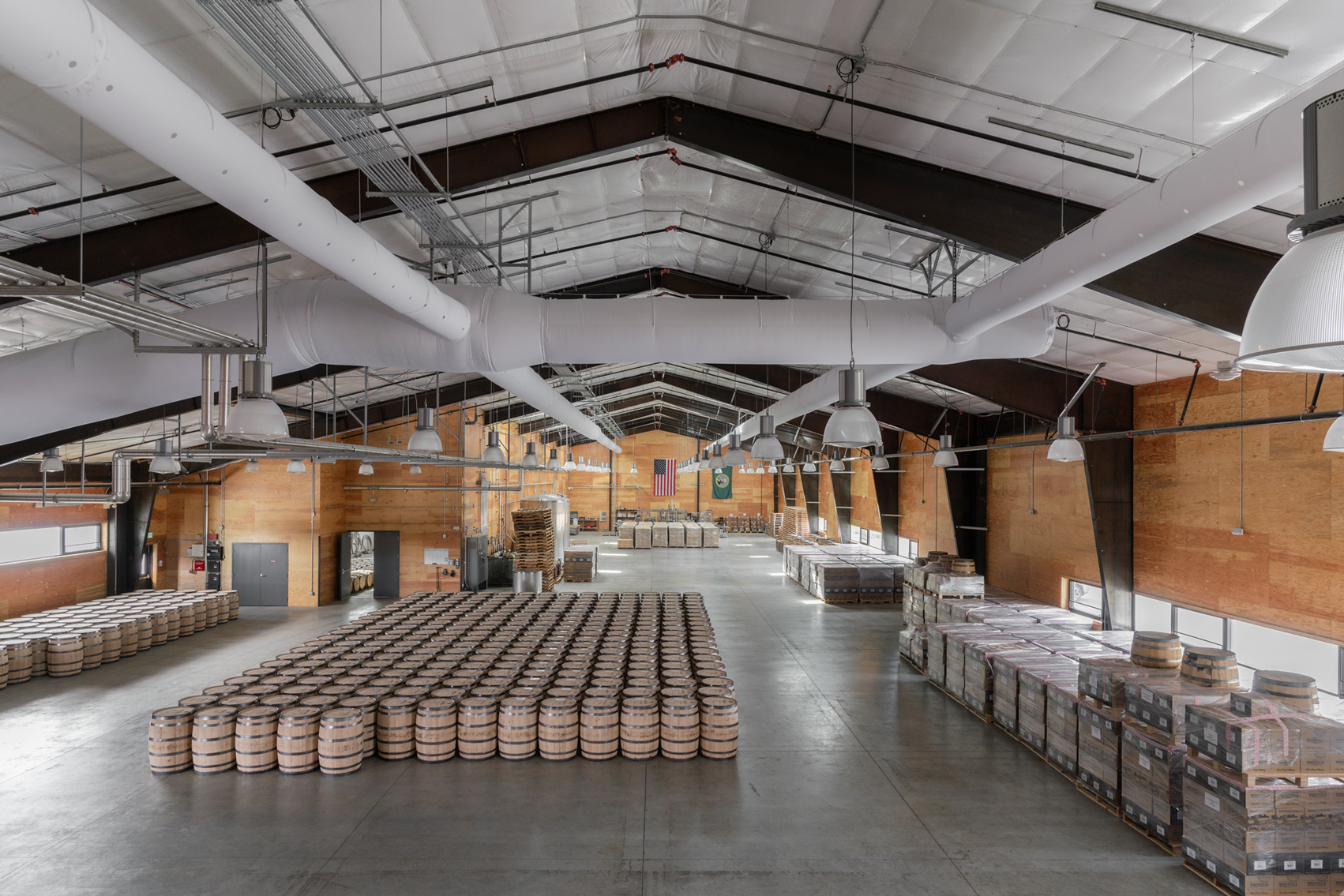
Pre-engineered buildings were selected for their inherent economy and capacity to deliver vast, open interiors with opportunities for tailored detailing where it matters most. In the building process, a slim canopy with a corten-clad inner core and a prominent pivot door signal arrival, while large vertical windows reveal the transition from office areas to processing spaces. Skylights and south-facing photovoltaic panels amplify natural light and support sustainable operations.
The barrel rickhouses are intentionally uninsulated and unconditioned to maximize the diurnal temperature swings of eastern Washington. This environmental responsiveness accelerates whiskey maturation, contributing to the rich profiles distinctive to Woodinville’s bourbons and ryes.
Future plans include a tasting room elevated above ground level to immerse visitors in the surrounding grain fields — a grain-to-glass experience unique in the region. The facility’s integration of industrial clarity, agricultural context and refined detailing positions it as a model of functional design executed with precision and purpose.
Precision-engineered Butler buildings were the perfect choice for Woodinville's new rickhouses because they allowed for a classic structure that could be customized to fit the aesthetic surroundings of the agricultural setting.