


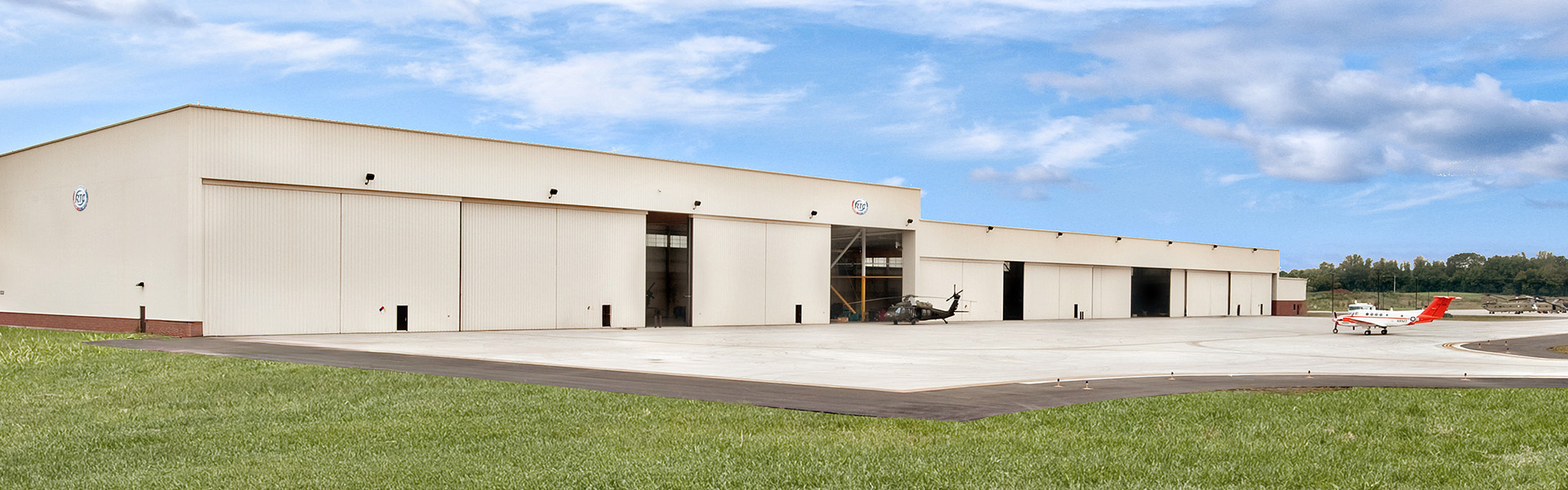
Redstone Arsenal Rotary Wing Center
A complex aviation testing mission unified into one secure facility, overcoming site, schedule and operational challenges to deliver flexibility, safety and long-term performance at scale.
Project
Overview
After two aircraft testing groups came together in 2010 in Hunstville, Ala., a facility was needed to consolidate aviation testing, administration and operations under one roof.
The result is this 128,000-square-foot structure that serves as the Redstone Test Center and integrates the testing areas along with parts storage and technology shops within a single footprint.
Nearly 60 percent of the building is dedicated to hangar space, with the remaining area supporting office and operational functions. This balance allows the Army to test, maintain and evaluate rotary and fixed-wing aircraft without fragmentation or inefficiency.


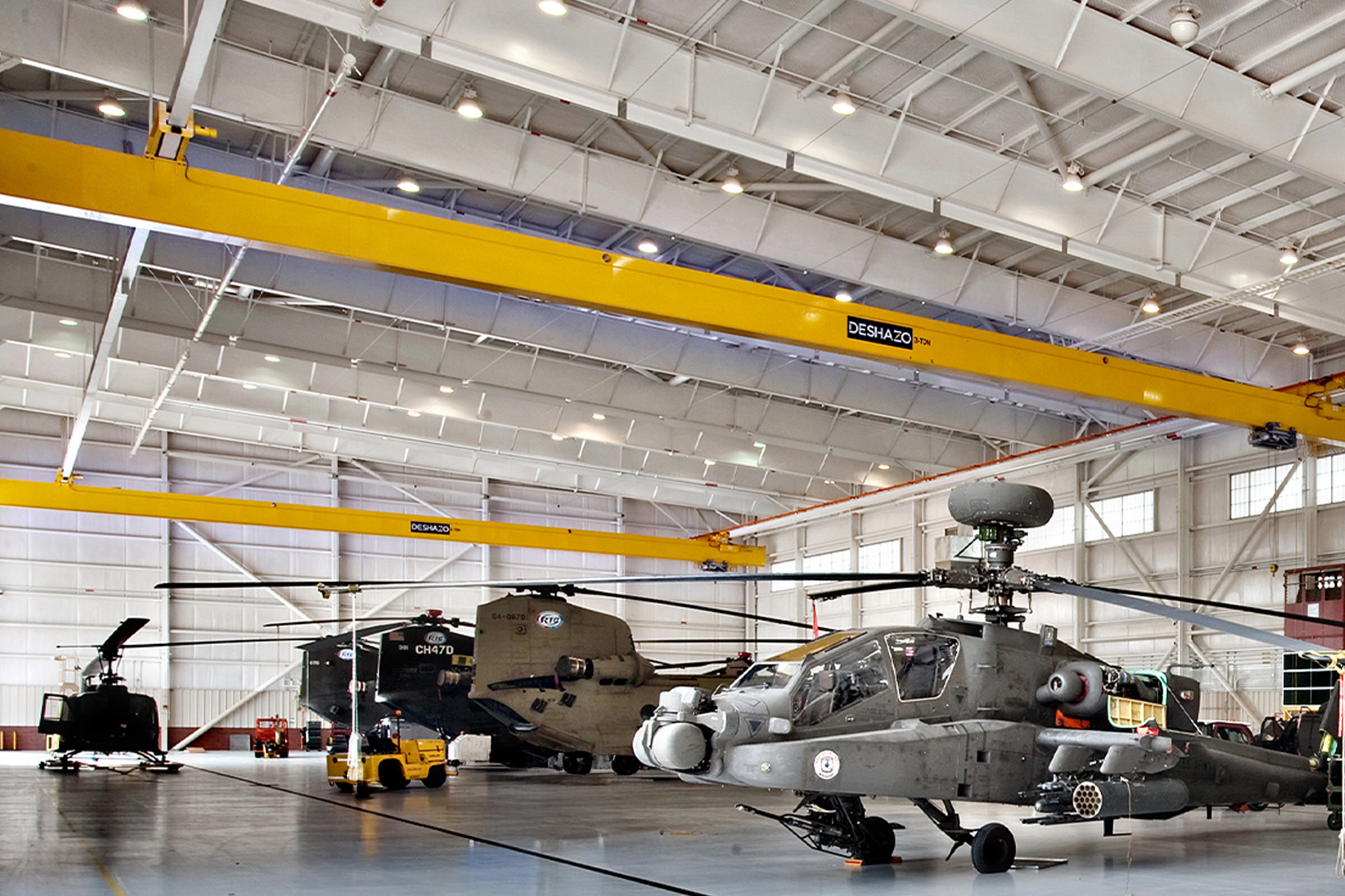
The hangar configuration is defined by a bi-level high-bay roof structure engineered to maximize flexibility across aircraft types. The high bay accommodates four CH-47 aircraft at the upper level, with overlapping service areas supporting two C-27Js or two Gulfstream 550s.
The lower high bay simultaneously supports six UH-60 aircraft, with shared service capacity for three AH-64s and four OH-58s. Large scale door openings support this operational flexibility, including a 28-foot by 390-foot opening at the low bay and a 39-foot by 290-foot opening at the high bay, each equipped with sliding doors and strategically placed columns.
Structural demands were met using a Heavy Structures approach, supporting long spans, overhead equipment and aviation clearances without compromise. Four three-ton overhead bridge cranes, safety cable systems and a fire suppression system reinforce safety and operational readiness.
The roof is a painted standing seam metal roof system using the MR-24® Roof System, selected for its proven performance and long term durability. Exterior walls are clad with Butlerib® II Metal Wall Panel Systems, delivering strength, consistency and protection in a demanding aviation environment.
The project presented significant challenges. The site required full utility development across a variable and sloping 75-acre parcel, including aircraft hardstand areas, taxiways, parking, storm systems and bio-pond remediation.
Construction occurred adjacent to an active airfield, requiring precise coordination with airfield personnel and the U.S. Army Corps of Engineers to maintain safety clear zones and manage jet blast and aircraft movement.
Despite these complexities, the facility was delivered on an aggressive schedule and within tight budget constraints. The result is a centralized testing hub that strengthens mission readiness and accelerates aircraft development cycles.
As Maj. Greg Fortier said, “I stand here in awe of this facility.”
Built to endure and engineered for assurance, the Redstone Test Center hangar stands as a precision-driven solution where performance, coordination and trust converge.


