


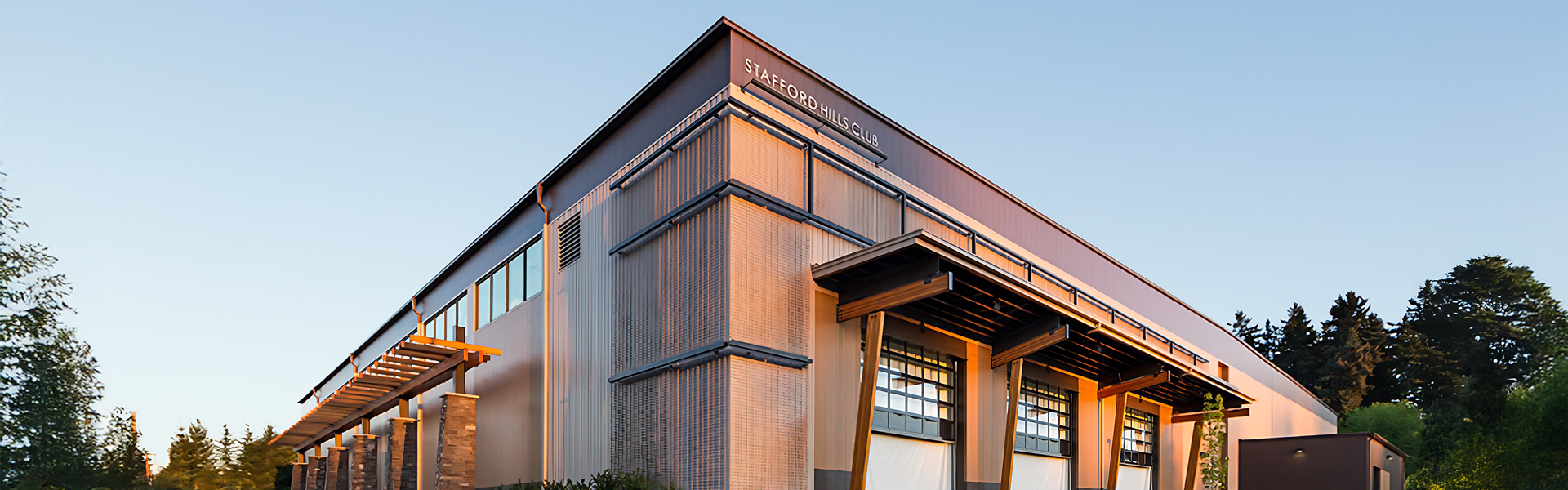
STAFFORD HILLS CLUB
With a nod to a classic Butler building and an understanding of community expectations, Stafford Hills Club brings a stylish and energy efficient tennis experience to an Oregon neighborhood.


Project
Overview
The Stafford Hills Club in Tualatin, Ore., demonstrates how Butler systems deliver design freedom through engineered assurance.
Inspired by the USTA National Tennis Center — itself a Butler structure — Jim and Marla Zupancic envisioned a facility that would combine world-class athletic amenities with long-term structural performance.
Working with Butler Builder® S M Andersen Co., Inc., the 95,000-square-foot facility leverages Butler primary framing systems to provide unobstructed courts, StylWall® flat and fluted wall systems for architectural distinction and the MR-24® standing-seam roof system for industry-leading durability and watertight performance. Butler Heavy Structures engineering expertise ensured precise load management for the elevated skybox and fitness mezzanine.


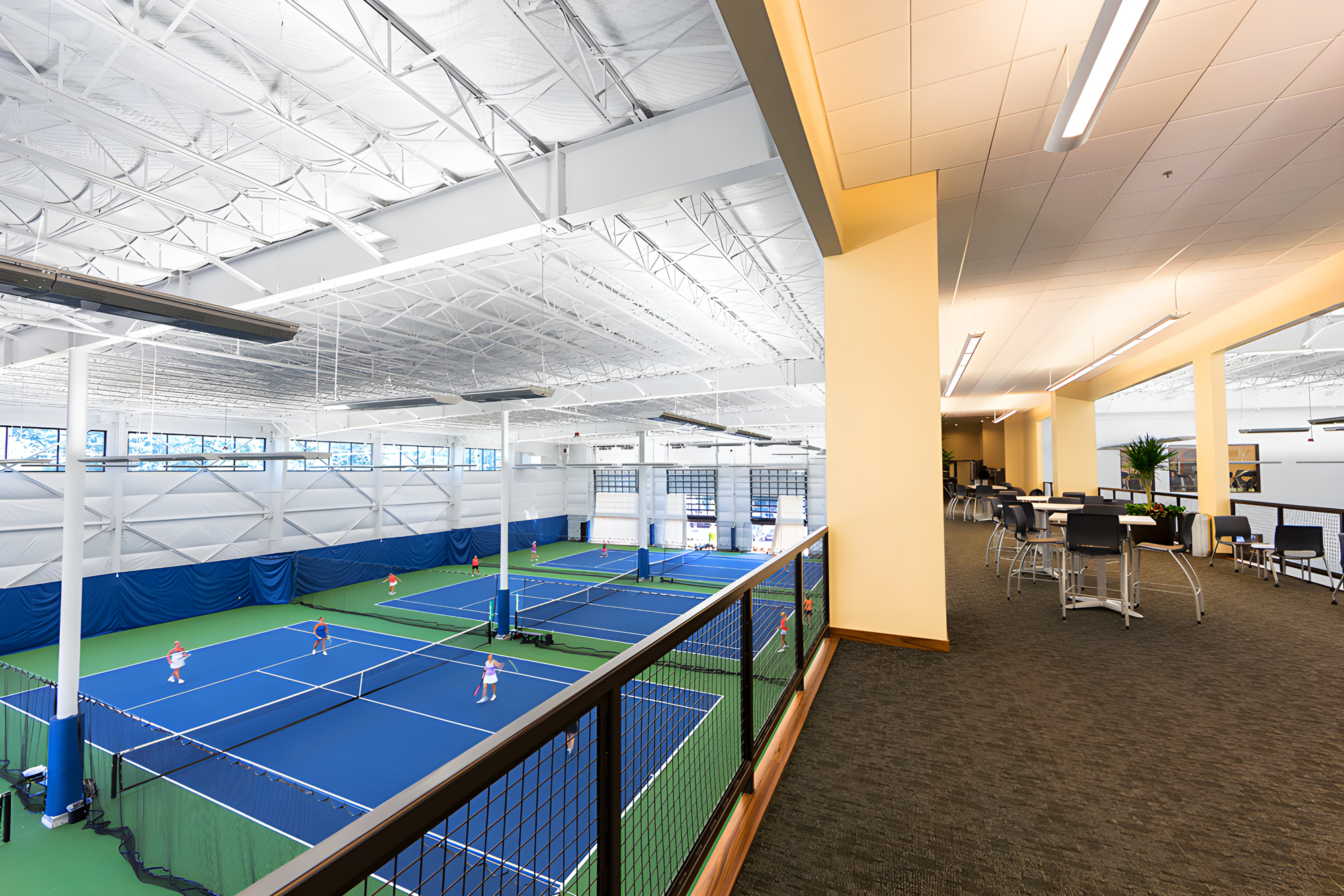
Engineered for energy efficiency, the building integrates R-30 roof insulation, factory-finished steel panels and natural convection systems that maintain comfort year-round. Together, these precision systems earned the facility LEED Silver certification — reinforcing Butler’s legacy of sustainable performance.
“Our goal was to create a legacy property,” said owner Jim Zupancic. “The quality of Butler systems gave us the confidence that this facility will perform for generations.”
The plan called for creating an architecturally appealing building representative of the Pacific Northwest, but the overall scale of the structure in a residential neighborhood presented a challenge. Architect Ray Yancey had to design the large structure to be attractive and a complement to the natural environment.
The project underwent a series of architectural reviews, and Yancey mixed colors and textures to downplay fears that the building could end up looking like a metal box — a big concern voiced by the local design review board. The final design incorporated a combination of steel, wood and stone.
The final design plan called for two buildings: one to house the tennis courts and clubhouse, and another that housed offices, meeting rooms, a salon/spa, fitness studios, demonstration kitchen and aquatics locker rooms.
The largest building, which houses the tennis courts and clubhouse, required the Widespan™ structural system to eliminate obstructions over the tennis courts.
In a nod to the USTA building in New York, the Zupancics requested that the design include a second story “skybox” level that would allow spectators to watch matches.
Our goal was to create a legacy property, and in order to do so, we needed the quality of the building to match our vision.
To accommodate that request, the Butler Heavy Structures group was brought in to oversee necessary engineering and design changes.
“The Butler Heavy Structures group played an integral role with the heavy loading for the second floor of the building, along with the stairs and exercise room. It was really helpful as a general contractor to have them come in and handle the process directly,” said Brent Schafer of Todd Construction.
The unique building-within-a-building aspect of the clubhouse design provided an interesting energy-efficiency benefit. Any excess heat that escaped the interior clubhouse windows went directly into the tennis building, creating an efficient heat transfer in which one building heats the other. This intentional engineering approach channels heat loss into the tennis building and keeps it remarkably comfortable in the winter.
The completed 95,000-square-foot Stafford Hills Club exudes excellence with its seven indoor tennis courts, three outdoor courts, a resort-style pool, cafe and high-tech gym equipment.
The club has been embraced by community neighbors who were at first skeptical of the project and the potential it had to negatively affect property values. Those neighbors now take the opportunity to participate in group fitness, cooking classes, networking events and other fun activities at the club.


