


Structural Stability
Engineered to control movement.
Bracing is what keeps the building steady when conditions push back. It works quietly in the background, reinforcing alignment and preserving the integrity of the structure as forces act upon it. By supporting stability across the frame, it helps the building hold its shape, protect its investment and perform as intended over time. Designed to work within a coordinated building system, bracing brings confidence to both design and execution, ensuring the structure remains composed, resilient and dependable long after construction is complete.
Features
Structural bracing engineered to enhance lateral load resistance and maintain building stability.
- Steel rod bracing provides higher tension capacity and strength compared to cable systems.
- Rigid portal frame action supports clear-span applications and unobstructed interior spaces.
- Bracing systems are wind tunnel-tested for performance under hurricane-level wind loads.
Product Options
Product Options
Rod & Angle Bracing
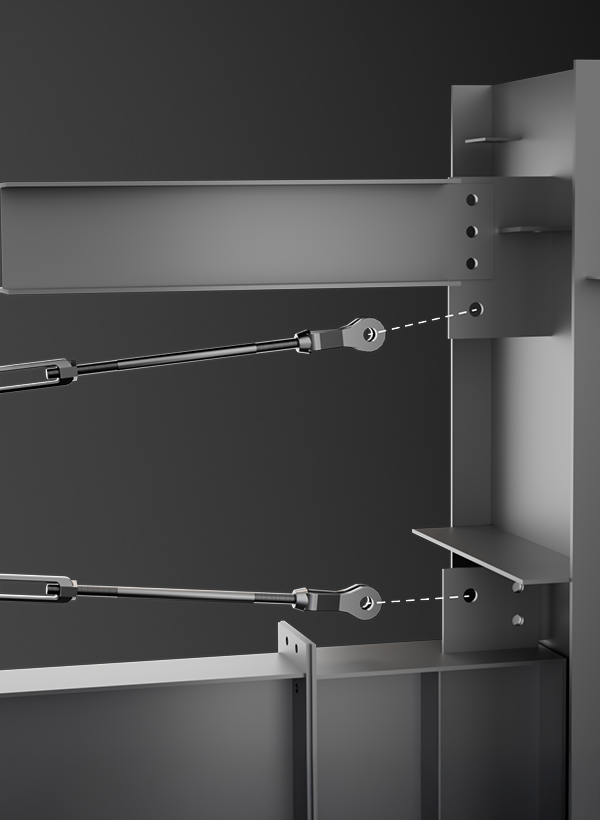
Rod and Angle Bracing provides a traditional, efficient method for resisting lateral loads. Tension rods and angle members stabilize the structure while maintaining clear load paths.
- Hot-rolled steel rods provide X bracing in roof and wall longitudinal lines.
- Angle assemblies provide diagonal bracing where X rod bracing is not feasible.
- Factory-engineered gusset plates with matched hole patterns align with Butler frames.
- Erection details specify high-strength bolting with defined pretension requirements.
Product Options
Portal Frame
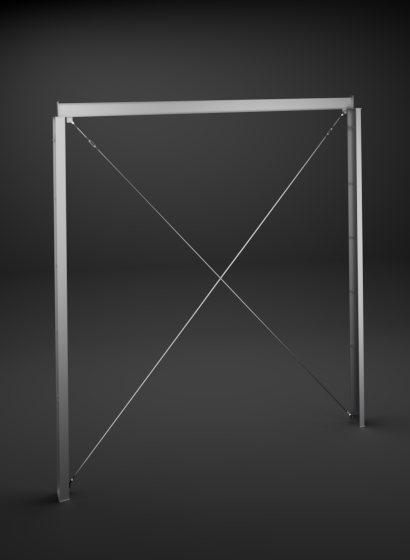
Integrated into the primary structure, it reinforces balance and strength without introducing visual or spatial compromise. The result is a building that stays composed under pressure, supports demanding layouts and delivers confidence where openness and performance must coexist.
- Rigid steel frame assembly including engineered portal frame resists longitudinal loads through moment frame action.
- Factory-designed connection plates support accurate alignment during installation.
- Clearance-preserving design maintains full-height door openings and unobstructed equipment paths.
- Tapered column option means that select portal frame columns can be tapered to reduce impact on interior space.
Product Options
Portal Brace
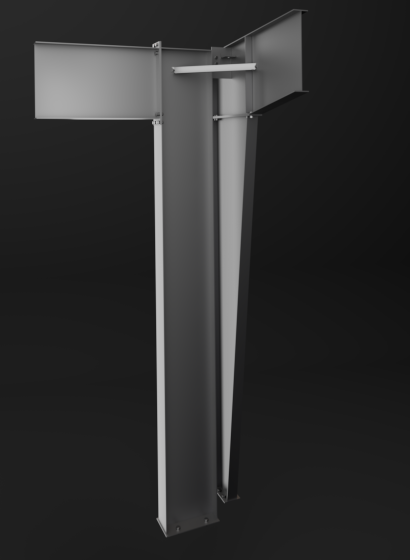
Portal Brace systems use engineered bracing elements to resist lateral forces at large openings. The system provides stabilization where traditional bracing is limited by access or geometry.
- Engineered steel brace resists longitudinal loads through controlled structural action.
- Factory-designed connectors support accurate placement during field installation.
- Compact brace geometry means this is designed for installation in tight building areas with limited available space.
Product Options
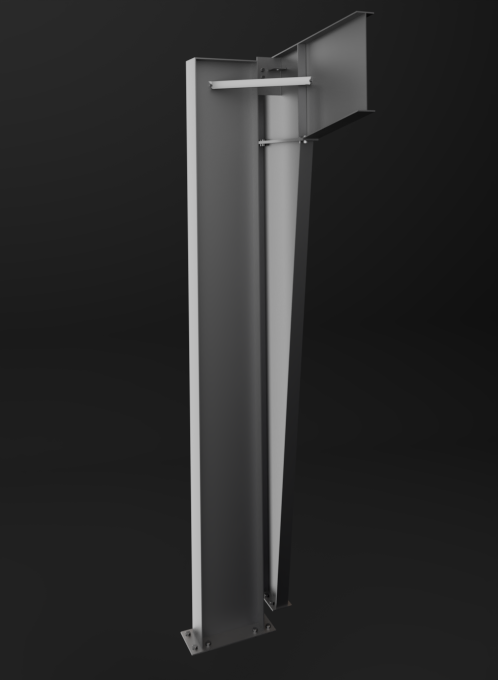
Wind Posts
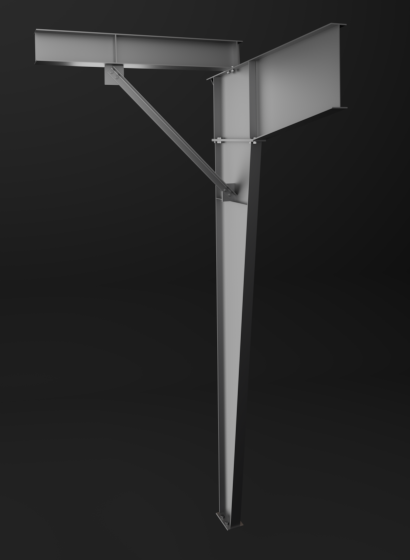
- Wind Posts are designed to resist building lateral loads and transmit them to the ground as a horizontal reaction and a moment at the foundation.
- Each wind post is restrained against global buckling at the top of the post and uses a set of connection clips to attach the wind post to the main frame.
- Axial loads from the bracing system are transferred to the wind post via a simple shear plate connection.
- Windpost allows for less bracing interference within the braced bay due to no horizontal members.
Product Specs
Related products


CONTACT US
Talk with Butler to bring clarity to your project early. Our team helps align design intent, performance requirements and delivery expectations so you can move forward with confidence.
FIND A BUILDER
Locate an authorized Butler Builder® in your area. Our nationwide network makes it easy to identify experienced partners who work within Butler systems and share the same commitment to quality as we do.