


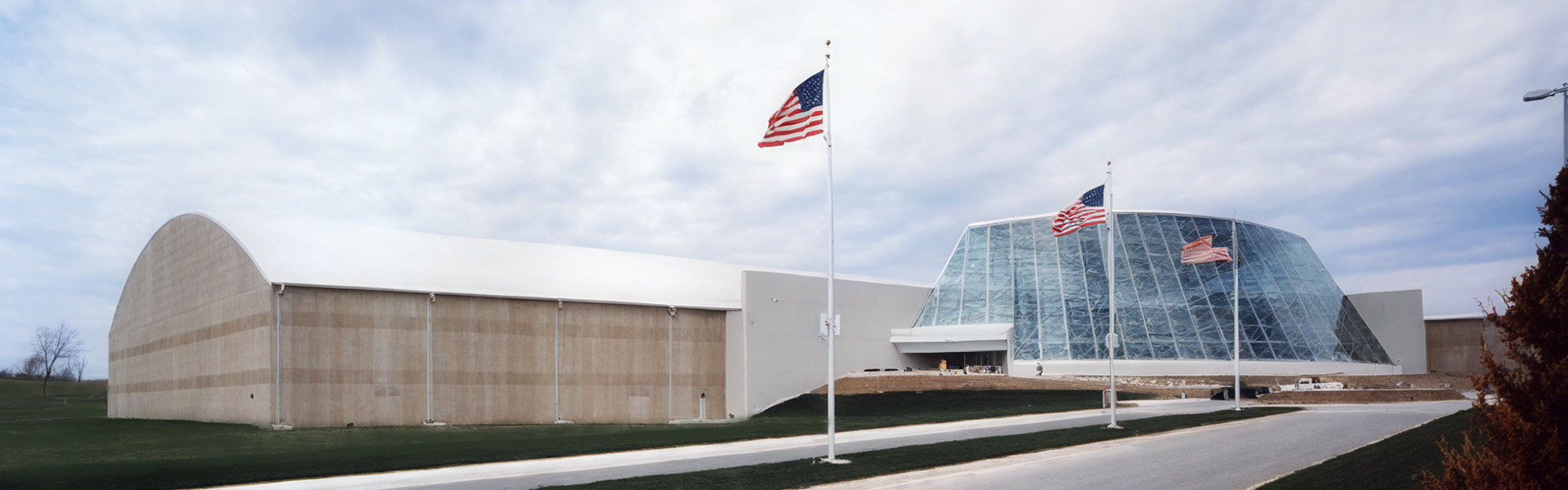
Strategic Air Command & Aerospace Museum
A massive aviation museum solved the challenge of protecting irreplaceable aircraft by partnering to build a clearspan space that balance historic form, modern performance and the durability required to preserve national heritage for generations.
Project
Overview
Originally established in 1959 at Offutt Air Force Base in Nebraska, the Strategic Air Command Museum faced a turning point by the mid-1990s as aircraft exposure to the elements accelerated deterioration.
In 1998, the collection moved indoors to its new Ashland facility. Now called the Strategic Air Command & Aerospace Museum, the facility stands as a permanent structure built to preserve history while inspiring the future.
Designed to emulate the curved-roof military hangars of the 1940s, the facility delivers the scale and strength required to house some of the most significant aircraft of the Cold War era under one roof.
Butler Heavy Structures designed and supplied the conventional structural steel framing system that made these spans possible.


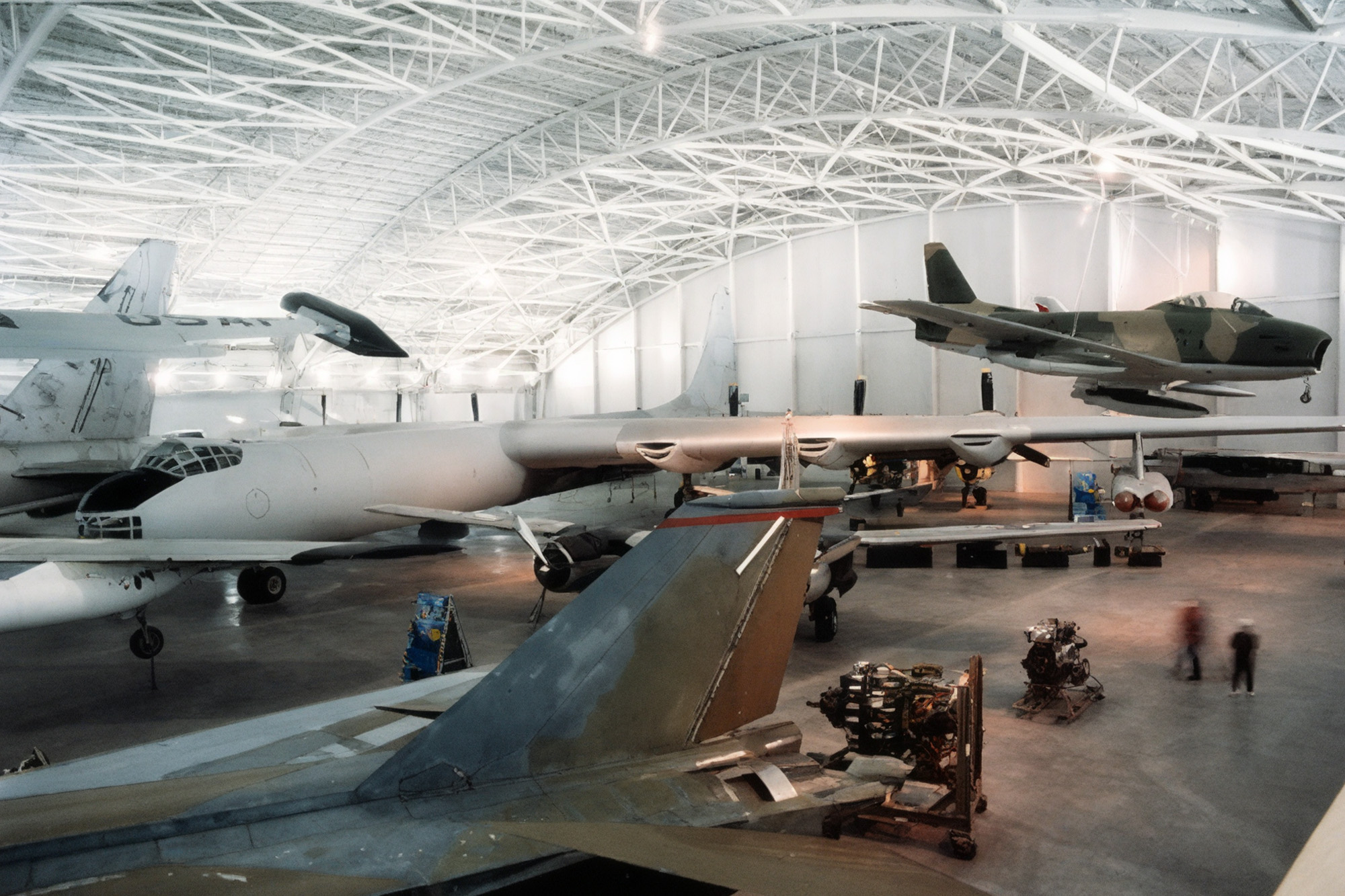
The museum encompasses 207,000 square feet of aircraft restoration and exhibit space, anchored by two arched clearspan hangars connected by a glass-enclosed atrium. Each hangar spans 270 feet without interior columns, preserving uninterrupted sightlines and flexible exhibit layouts. At the eave, the structure provides 30 feet of clear height, expanding to 60 feet at the apex of the arches to accommodate large-scale aircraft displays.
Arched frames establish the primary structure, while truss purlins span between them to support the roof system. The result is a structural solution that balances architectural form with disciplined load management.
Each hangar is equipped with 150-foot-wide by 35-foot-tall bi-parting doors at the rear walls, allowing aircraft to move in and out of the facility with precision. Above those doors, 20-foot-tall tail doors were integrated to accommodate larger aircraft profiles, ensuring the museum could protect its most valuable assets without compromise.
Additional systems were selected to reinforce performance and longevity. An MR-24® roof system with an acoustical liner panel supports noise reduction within the expansive interior. Masonry walls anchor the structure, while Butlerib® II metal wall panel systems were applied at end walls with hangar doors to deliver durability and continuity of appearance.
The museum’s purpose extends beyond shelter.
“Our museum was built as a state-of-the-art center for housing the aircraft and artifacts used by the Strategic Air Command during the Cold War,” the museum’s leadership says. “With careful restoration efforts and impressive displays, we’ve been sharing this critical time in our history with the next generations for more than 25 years.”
The structure was designed to serve that mission without distraction, allowing the exhibits to lead the experience.
“Now, we aim to honor our heritage while looking toward the bright future of air and space innovation. The museum remains a significant historical resource while also using its collection to ignite the imagination of tomorrow’s scientists and explorers.” The building supports that future through scale, adaptability and protection.
Today, the museum stands as proof that when engineering is precise and purpose is clear, structures do more than shelter history. They secure it.


