


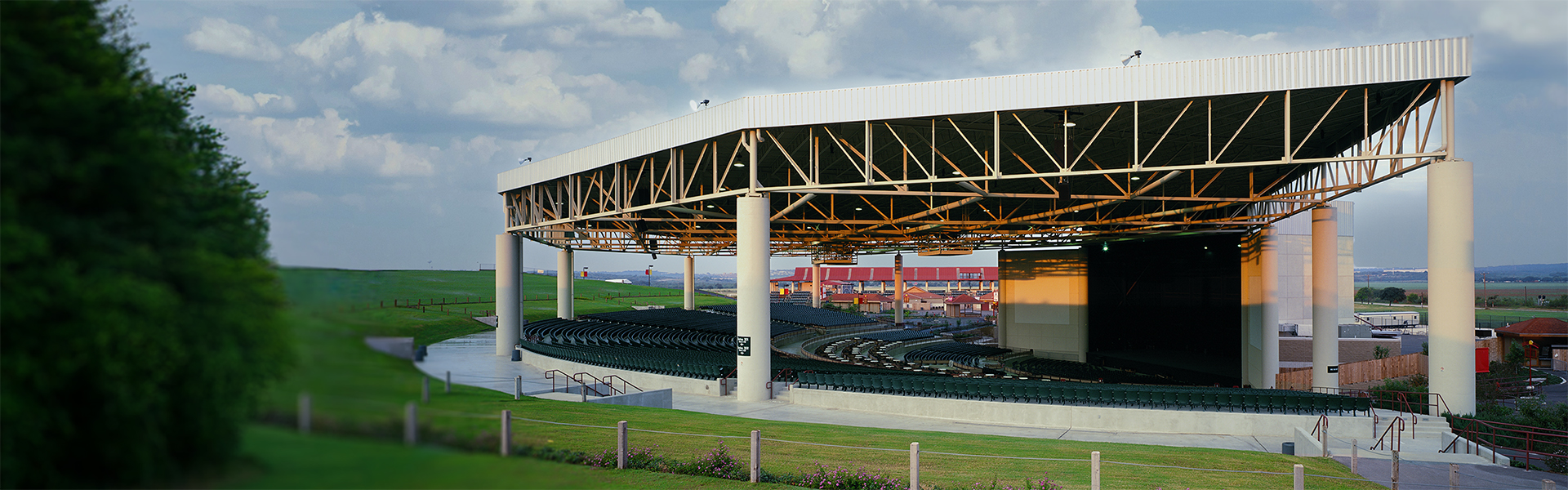
Real Life Amphitheater (Formerly Verizon Wireless Amphitheater)
A clearspan outdoor performance venue solved the challenge of covering massive audiences without sacrificing sightlines, acoustics or flexibility. The resulting venue hosted stars from Tom Petty to Taylor Swift during its heyday.
Project
Overview
How do you create a top-class outdoor concert venue that allows for incredible production, quality acoustics and large crowds while protecting artists and the audience from the south Texas weather?
That was the challenge for the creators of Real Life Amphitheater (formerly Verizon Wireless Amphitheater) outside San Antonio, Texas.
The structure needed to span wide distances, support significant rigging loads and create a covered experience without compromising sightlines or sound. The result was a fan-shaped amphitheater that balanced architectural presence with engineered precision thanks to the team at Butler Heavy Structures.


The amphitheater’s covered seating structure accommodates 8,000 people, with lawn seating extending capacity by an additional 12,000. Rising 67 feet above grade at the stage, the structure establishes a commanding-yet-composed profile within the venue. Its geometry widens from a 120-foot span at the narrow edge of the fan to 240 feet at the center, demanding structural solutions capable of long clear spans and consistent performance.
Over its life, the amphitheater hosted a wide range of artists and audiences. Performers such as Willie Nelson, Linkin Park, ZZ Top and Santana played to full crowds under the structure. On April 12, 2008, before the venue was sold to its current owner, a young Taylor Swift performed during her “Fearless” era alongside country artists including Rascal Flatts and Brad Paisley. The structure carried the load, the sound and the moment with the same consistency it delivered from opening night to today.
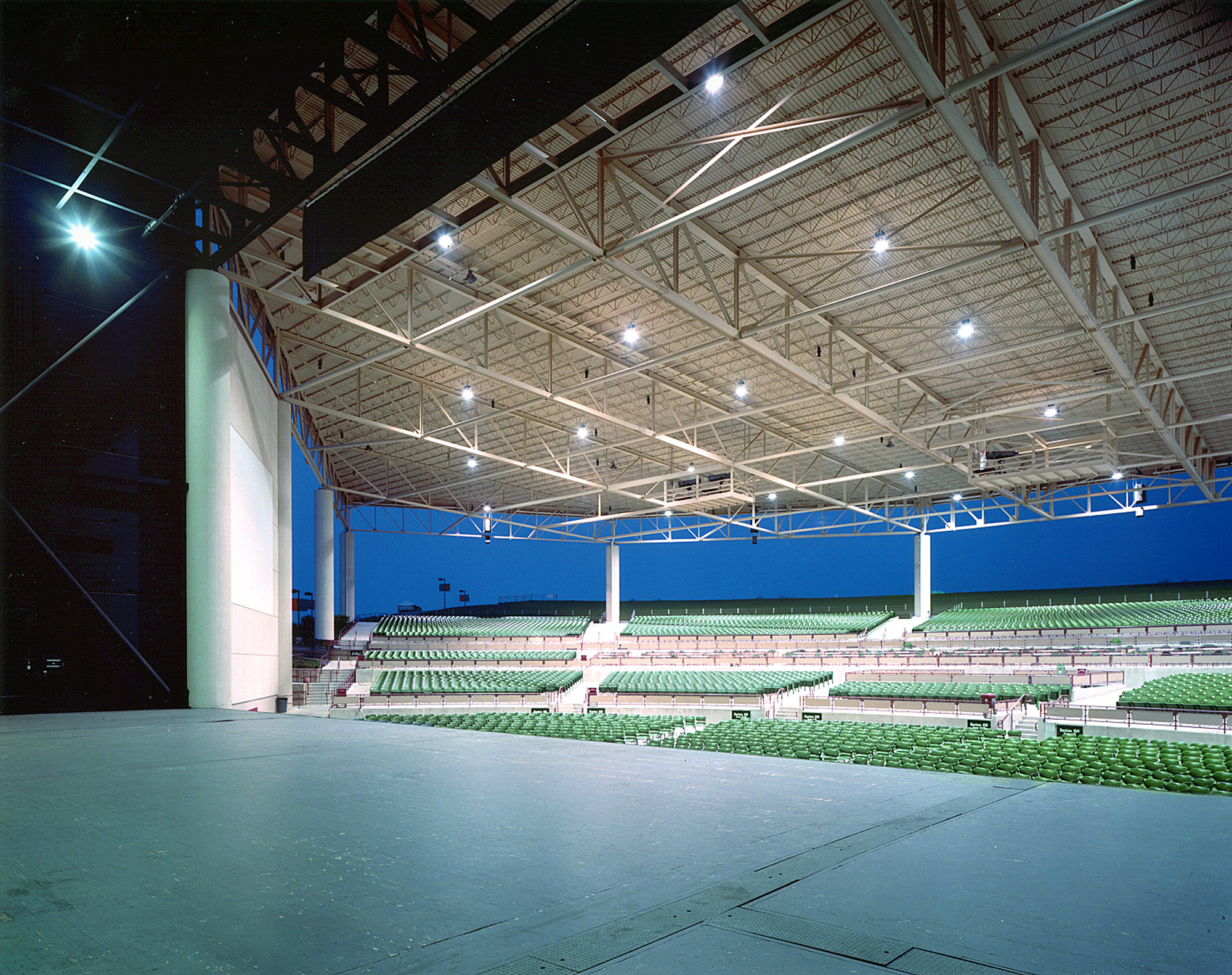
Butler Heavy Structures fabricated the primary structural system, anchored by 12-foot-deep parallel chord trusses. These trusses were factory-assembled from hot rolled shapes to ensure accuracy and consistency before being erected on site. Each truss is supported by five-foot diameter concrete columns, transferring loads efficiently while maintaining openness beneath the roof.
Above the stage, a structural steel grid system was integrated to support lighting, scenery and sound systems. Hot rolled sections laid out on eight-foot centers were engineered to carry substantial collateral loads without interruption. This system allowed production crews to adapt to changing performance requirements while relying on a stable and predictable framework.
The roof secondary system utilized conventional bar joists spanning from 40 to 60 feet. Each joist was designed to support a 2,000-pound load at any panel point, providing flexibility for suspended equipment across the roof plane. Around the perimeter, a custom fascia system created the appearance of a flat roof, concealing structural depth while maintaining architectural clarity. To manage runoff created by this profile, a stainless-steel interior gutter system was engineered into the design.
Pre-engineered components were incorporated where performance and efficiency aligned. A modified metal roof system with an acoustical deck was used to enhance sound quality within the venue, reinforcing the amphitheater’s role as a performance-focused space. Metal wall panels were applied to the fascia, completing the exterior with durable, low-maintenance materials suited to the Texas climate.
This amphitheater stands as a demonstration of engineered assurance. Complex geometry, long spans and demanding live load conditions were resolved through precision design and fabrication, creating a venue that has performed reliably through a generation of cultural significance.


