


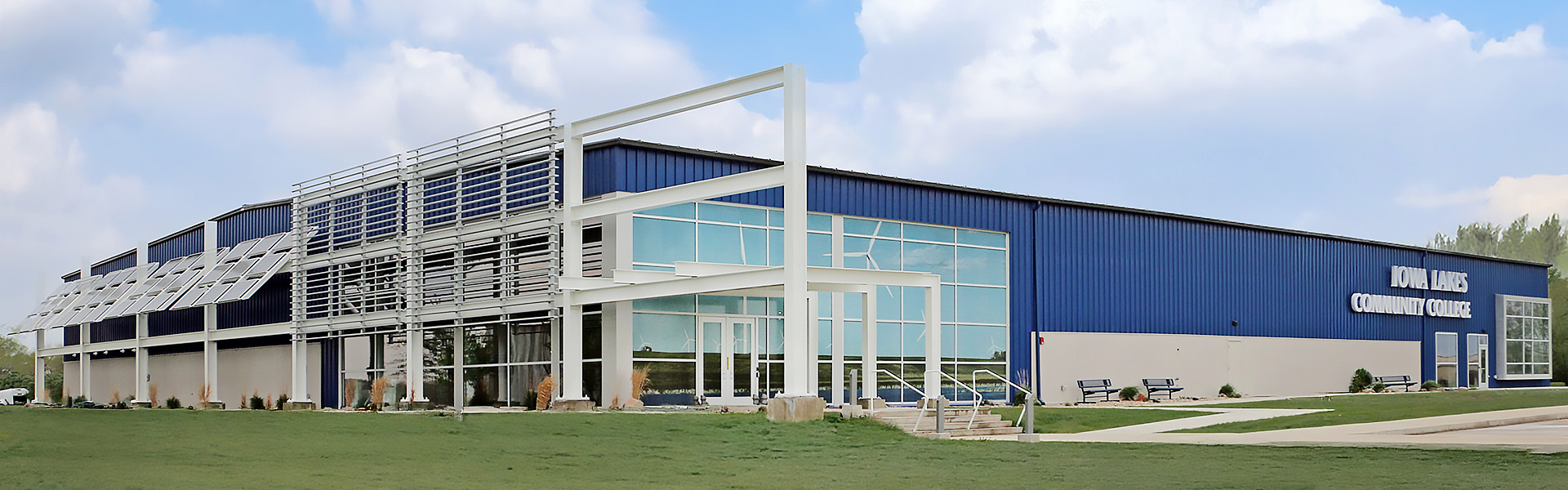
Iowa Lakes Community College SERT BUILDING
A once-abandoned factory becomes a high-performance sustainability hub, demonstrating how proven engineering, adaptive reuse and disciplined design can turn an aging structure into a modern training environment for future energy leaders.


Project
Overview
When officials cut the ceremonial ribbon to open the new Sustainable Energy Resources and Technologies (SERT) building at Iowa Lakes Community College, its green fabric signified more than school spirit. It reflected a facility conceived as both an instructional center and a working demonstration of sustainable design.
The project began with an abandoned stained-glass factory the school acquired at a sheriff’s auction, a structure that — through disciplined planning and high-performance components from Butler Manufacturing™ — was transformed into a modern learning environment.
Christensen Construction & Design Company, Inc., a Butler Builder®, was selected to lead the effort. The company had built the original structure in the 1980s, and the college relied on that continuity.


“We had a long-standing relationship with Christensen Construction. Our experience working with them on other Butler buildings gave us confidence that the building we purchased would be structurally sound,” said Delaine Hiney, a college official.
That confidence proved well placed. The original Butler 24-gauge MR-24® roof system remained secure and weathertight after 21 years.
No roof repairs were needed for the renovation, thanks to the longevity of Butler’s standing-seam roof design.
The existing 30,000-square-foot shell became the foundation for a program focused on energy stewardship, and Christensen Construction collaborated with frk architects + engineers to create new instructional spaces while preserving as much of the existing structure as possible.
Christensen added, “We still had the original Butler building plans from 1984. That helped us figure out ways to utilize pre-existing components yet make the renovated building fit green construction goals.”
The building’s original Butler structural system enabled larger windows and additional classroom areas that would not have been feasible in traditional masonry construction. Sustainable practices guided the work, including strategic material reuse. “We ended up tearing down some walls, but we recycled the wood, copper and steel,” Christiansen said. “We even recycled the concrete to make aggregate driveways.”
To reinforce campus identity, the existing metal wall panels remained in place and were clad with the 26-gauge Butlerib® II wall system. Butler Manufacturing provided a finish matched to the college’s color standard. The wall system’s insulation and low-maintenance performance contributed additional long-term value to the facility.
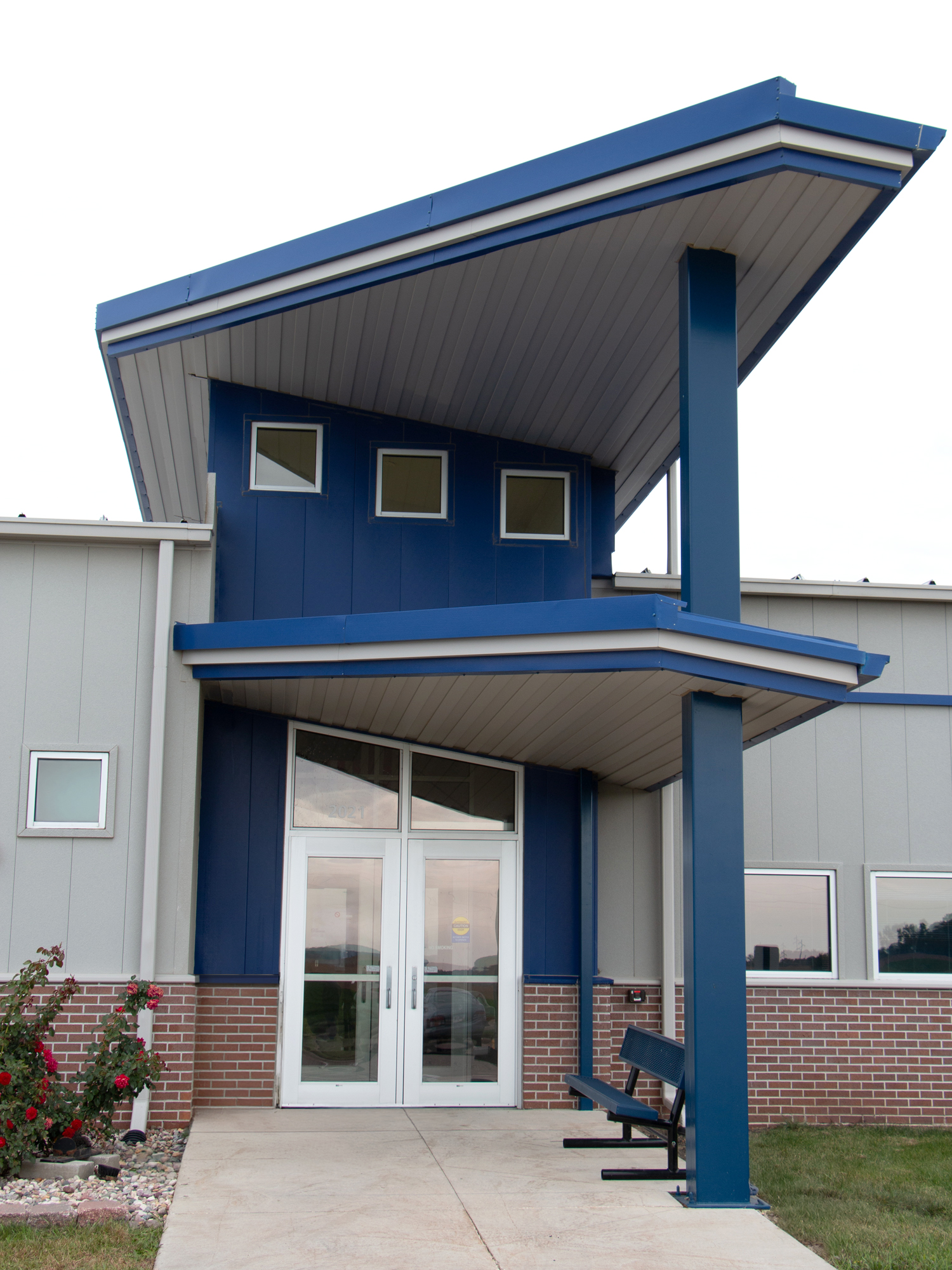
Natural light and energy optimization were central to the college’s instructional goals. Architect Doug Chervek, ALA, worked with Christensen Construction and Butler Manufacturing to integrate daylighting solutions into the existing roof profile.
Six daylighting units, each measuring 2 by 10 feet, were installed to distribute sunlight through prismatic acrylic domes.
“This whole building is about showing students how to incorporate different sustainable energy strategies into a structure,” Chervek said. “We tried to add as many strategies as we could within the budget.”
The flexibility of the structural system also supported additional mechanical and energy-efficiency measures, including geothermal heating and cooling, radiant-heated polished concrete floors, a photovoltaic array, sunshades that filter 60 percent of direct sunlight, thermal pane windows, occupancy sensors and lobby air-circulation fans. With these combined technologies, the expanded 42,000-square-foot SERT building now serves as an operational learning environment.
Said Hiney, “Our students now have a top-rated facility to safely engage in training and education needed to enter the workforce.”


