


SCI-Arc Magic Box
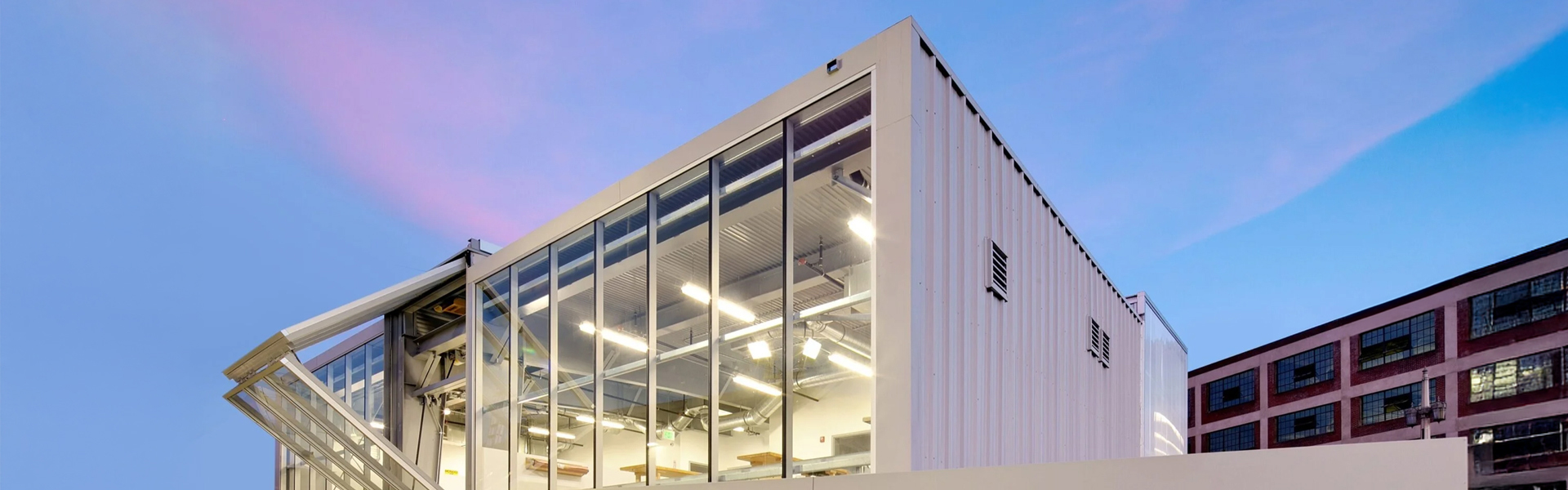
SCI-Arc expanded its fabrication capabilities with a 4,000-square-foot facility using specialized ventilation and flexible structural design. The project delivered a controlled, high-performance environment that aligns with the school’s technical and architectural goals.


Project
Overview
The Southern California Institute of Architecture (SCI-Arc) is recognized for advancing architectural thinking and preparing students to lead the profession. To support its curriculum and expand student access to digital fabrication tools, the school required a dedicated facility engineered for specialized mechanical, safety and operational demands.
The 4,000-square-foot addition, known as the Magic Box, was designed to consolidate advanced fabrication equipment and provide a controlled environment for high-output work.
“The school is where ideas get exposed to students. The building is where this friction occurs, and these debates occur, and outcomes of unknown possibilities occur," said John Enright, Fellow of the American Institute of Architects at SCI-Arc.


SCI-Arc partnered with AGA Architects and Bremco Construction, Inc., a longtime Butler Builder®, to deliver a structure capable of supporting complex ventilation, data and infrastructure requirements while aligning with the school’s design intent.
“Before we started the project, we were accumulating machines that were placed in different corners of the existing shop,” Enright said. “They needed a very specialized infrastructure having to do with fume exhaust and safety, and so it was important that the Magic Box be created to have a safe, clean, functional space for all that equipment.”
SCI-Arc and AGA evaluated multiple construction approaches. The Butler system provided the adaptability the team needed for a highly customized architectural application.
“There was interest on both sides to look at a metal building system for a variety of reasons. Some are inherent to that kind of a building, but, in a broader sense, we tried to look at it as a flexible system that would allow us to do a variety of things,” said John Bencher of AGA Architects.
By integrating Butler engineering early, the project team aligned aesthetic goals with system performance and constructability.
“Butler was the most willing to work with us on doing something like this. Other companies seem to have less of an interest in pursuing a kind of building that was so unique,” Bencher said.
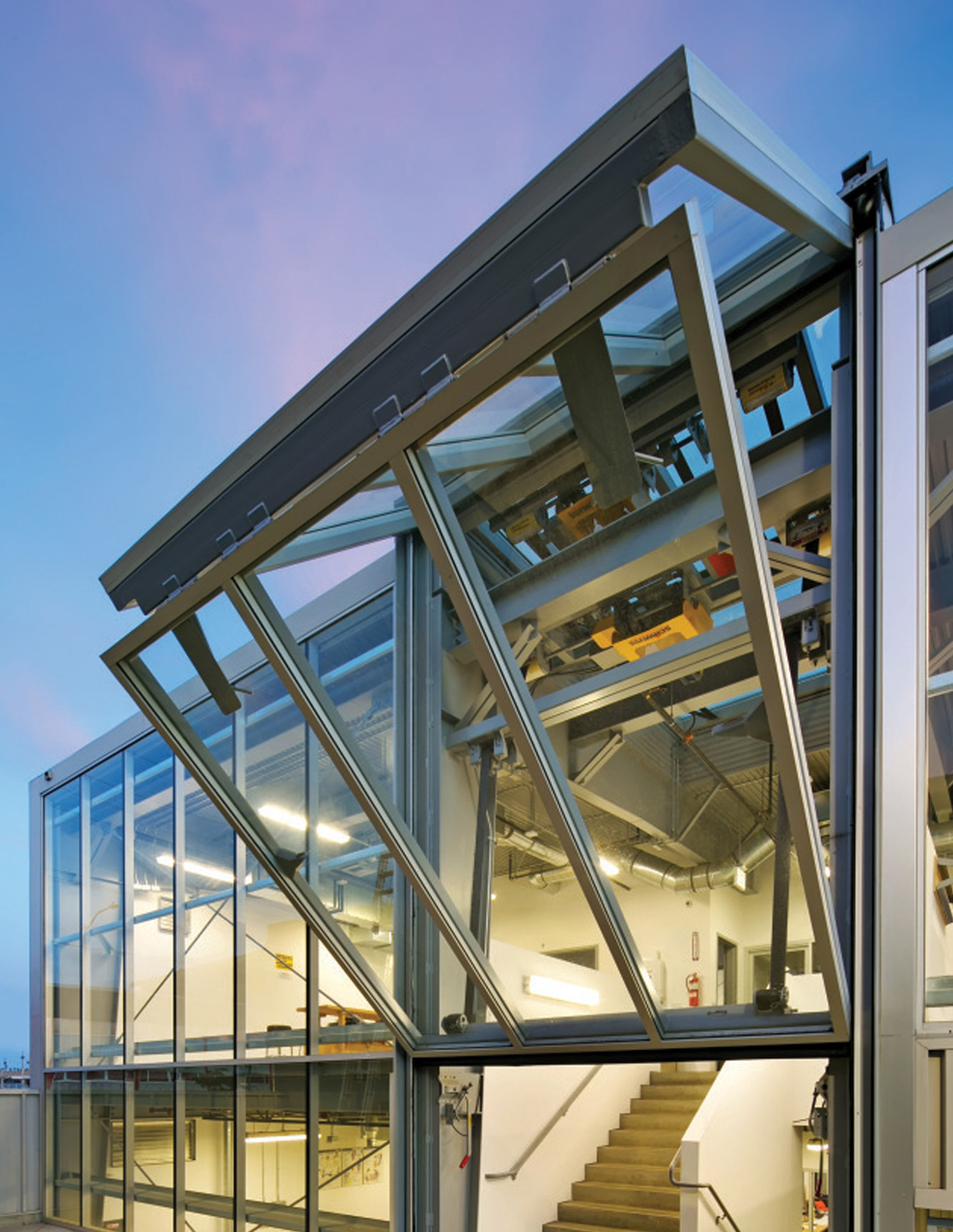
The Magic Box takes full advantage of a Butler structural system, known for its ability to support large, open interiors with minimal secondary supports. This allowed the project to incorporate:
- Floor-to-ceiling storefront glass
- Operable bifold skylights
- A scissor door linking the new and existing buildings
- Sectional doors opening to the exterior
- Translucent skylights and wall panels
- A recessed entrance and multiple awnings
- A multistory configuration
“The system was flexible; it allowed us to subtract metal pieces, add metal pieces very easily, with the same base structure and substitute one material for another,” Bencher said.
Minimizing interior columns allowed SCI-Arc to use glass interior walls for visibility and safety, ensuring faculty could monitor equipment use. Openings to the exterior support ventilation and simplify the movement of large raw materials.
The exterior palette remains clear and intentional. Metal wall and roof system panels, translucent wall panels and clear glazing create a cohesive finish. Deep corrugations provide structural strength and visual texture while simplifying transitions between materials.
The project served as a technical exercise for SCI-Arc and the design team in applying systems construction to a highly architectural environment. The result confirms the versatility and precision of the Butler approach.
“It did kind of show everybody that systems construction is a viable option [in this setting],” Bencher said.
SCI-Arc credits the project’s success to the disciplined collaboration between all partners.
“We explored how to customize within a given set of parts to something that was specific to what our needs were. With a project of this type, the coordination between owner, architect and builder is critical. All team members worked together to coordinate structure, metal building panels, skylights and openings in the project,” said Enright.
The Magic Box now supports SCI-Arc’s technical curriculum with an engineered, high-performance space built for flexibility, safety and long-term capability.
Butler was the most willing to work with us on doing something like this. Other companies seem to have less of an interest in pursuing a kind of building that was so unique.


