


Grace Medical Clinic
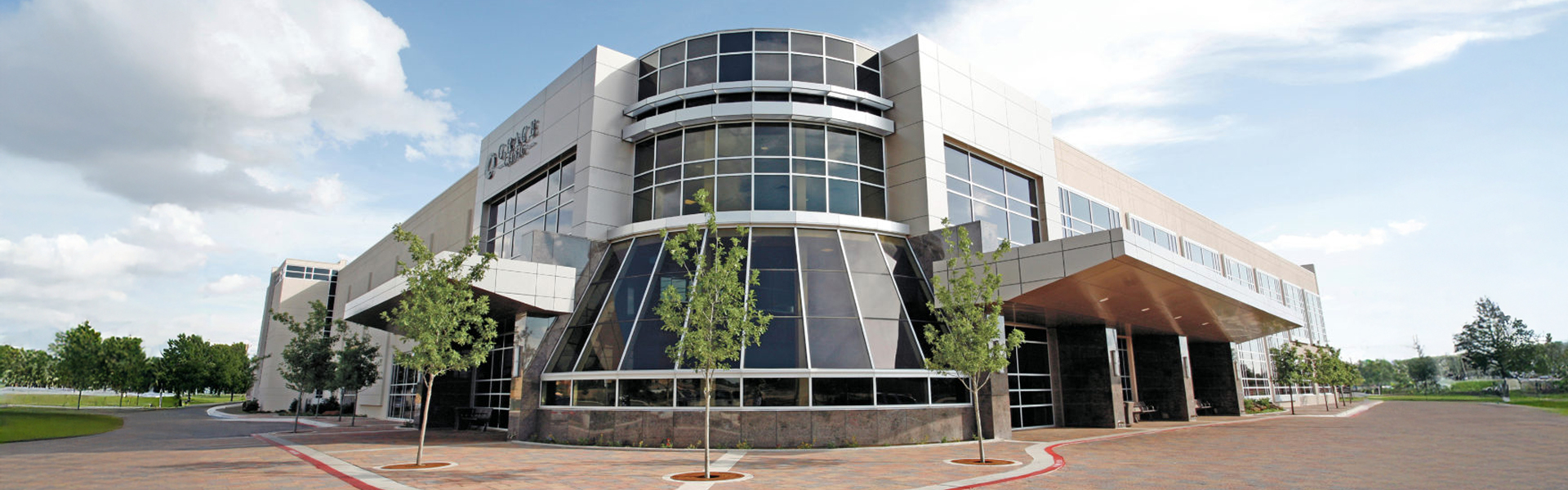
A medical practice looking to expand needed to think not only about immediate needs but future needs for its patients and community. Butler products and innovation provided the flexibility and stability to create a 110,000-square-foot healthcare haven for the community.


Project
Overview
When Grace Clinic head, Dr. Randy Hickle, set out to redefine patient care in Lubbock, Texas, the vision required more than architectural ambition — it demanded engineering certainty. Butler Manufacturing® systems provided the proven foundation to bring that vision to life.
Working with longtime Butler Builder® McComb Construction Co., Inc. and the design team at Parkhill, Smith and Cooper, the 110,000-square-foot facility was engineered for speed, efficiency and enduring performance. Butler’s MR-24® Conventional Roof System and ThermaLiner™ insulation system deliver exceptional thermal control and weathertight assurance, protecting sensitive medical equipment while reducing lifecycle energy costs.


The fully insulated structural wall system achieves an R-24.8 rating, combining clean interior finishes with superior moisture protection — essential for sterile environments. Butler engineers also provided precise structural design for second-floor operating suites, ensuring vibration loads met strict medical standards.
Through Butler’s precision-engineered systems, the project achieved its ambitious schedule without compromise to quality. Grace Clinic now stands as a benchmark for modern healthcare design — a building that performs with the same confidence and reliability its physicians deliver every day.
Hickle’s vision is a full visit, from doctor to labs to prescriptions, lasting 45 minutes or less in a bright, efficient building designed to better serve patients.
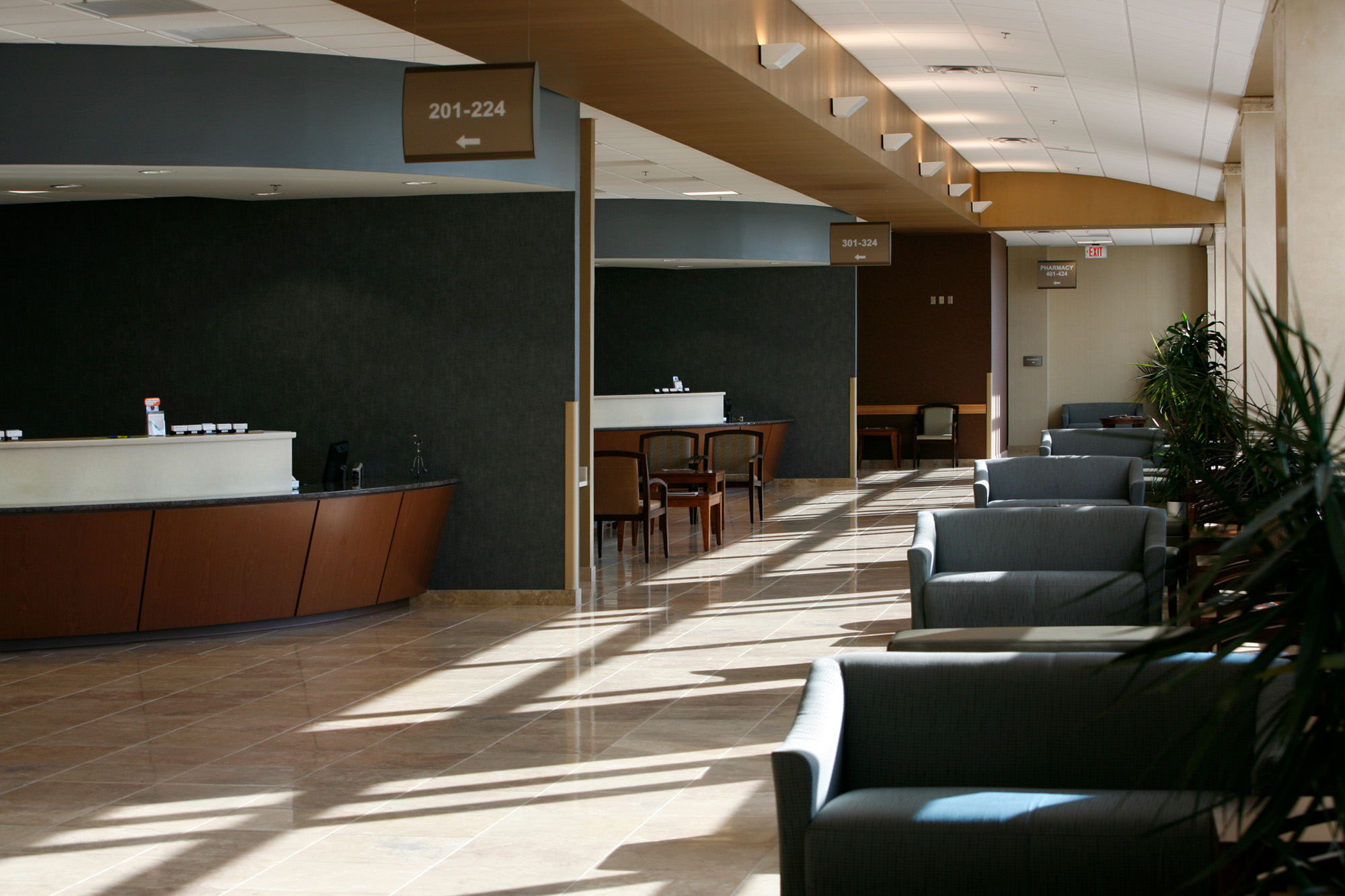
The idea for an integrated healthcare space came after extensive research of other facilities nationwide, hundreds of medical professionals and dozens of patients. One of the interesting findings – and something that required a flexible and customizable structure – was that patients don’t enjoy all the sights, sounds and smells of a medical facility.
“They don’t walk through the physician’s work environment here,” Dr. Hickle said. “They meet their doctors in the exam rooms. The exam rooms and all of the areas the patients see are designed more like a hotel than a hospital or clinic.”
That feeling of hospitality starts on the outside, where the goal was to be approachable and attractive.
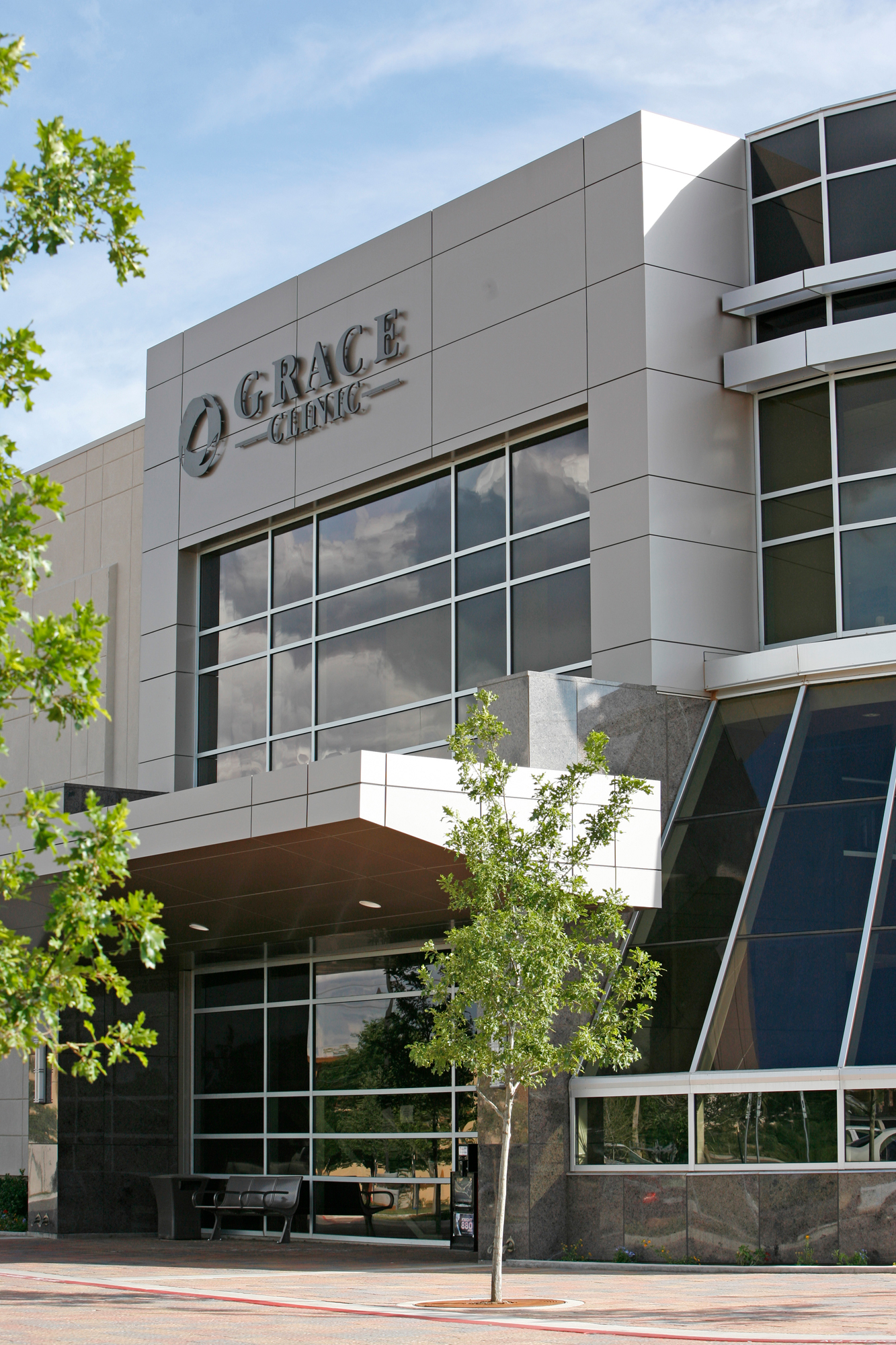
That feeling of hospitality starts on the outside, where the goal was to be approachable and attractive, according to Kelby T. Sue, AIA, principal at Parkhill, Smith and Cooper. During the research process, women provided the greatest feedback regarding design.
“We wanted something tasteful and attractive to women, while projecting the image of an up-and-coming, innovative health care delivery system,” Sue said, highlighting the two-story, glass entry on the northeast corner, which softens the large structure and provides a beacon for the facility.
“Drivers traveling either direction on the adjacent highway see it. Inside, you experience the entire two-story spatial volume, with the second-floor balcony looking down into the lobby.”
Warm colors, comfortable furniture and smart acoustics create a calming atmosphere in private waiting areas. Exam rooms come off a central spine that houses the clinical work areas.
With an innovative and complex vision, the largest challenge for the project was the short timeline. McComb recognized immediately that Butler® building systems would work perfectly for the two-story clinic and the contemporary design.
“It is a large building — a two-story structure with some very critical steel design criteria for the second floor, plus requirements for very high R values in the roof and walls,” said Jim McComb. “All those factors fit well with Butler systems.”
We’re delighted with the building. Our patients are very satisfied with it. It’s a beautiful facility inside and out. It’s meeting our key objectives of facilitating high-quality healthcare in a setting that improves the patient’s experience and provides more efficient — and therefore more cost-effective — service.
Ground was broken in late October 2015, and the first-floor clinic and imaging areas opened in November 2016. The second-floor surgery unit was completed around five months later.
“That we were able to pre-purchase the Butler products and have them ready when needed was critical. Dr. Hickle had worked on this for several years and, when he finally pulled the trigger, he wanted it done quickly,” McComb said.
The architects worked extensively with Butler engineers during the design process, even visiting Butler’s regional office in San Marcos, Texas, early in the process to work out details.
“It was a really beneficial experience,” says Sue. “We had many nuances outside the norm for systems construction. Of course, we understood that Butler’s forte is systems that can go above and beyond what you can order out of the book. Their engineers were very helpful in pulling off the design.”
The preliminary designs specified an exterior treatment with some panels set in and others set out from the wall. Fully insulated, steel-core panels virtually eliminate areas for water to collect and mold to grow — an essential consideration for the clinic with an insulation value of R-24.8.
“In North Texas, high R values for the roof and walls are very important. We also gave them an R-30 rating and a nice clean liner panel in the roof with the MR-24® standing seam roof system and ThermaLiner™ insulation system,” McComb said.
The MR-24® Conventional Roof System’s weathertight performance, and the wall system’s mold resistance were ideal for a medical facility, explains Hickle. “We have expensive equipment that can’t get wet. And the risk of mold in patient care settings isn’t an option.”
Perhaps the biggest challenge was locating the operating rooms on the second floor. “Typically, operating rooms are located on the ground floor because eliminating vibration is critical with all the instrumentation,” said Chad Henthorn of Lee Lewis Construction. “We were able to work with the Butler engineers to ensure the vibration loads did not exceed project requirements. That they had the expertise to make that work helped tremendously.”
Grace Clinic is more than a one-stop shop for family healthcare. It is also a progressive learning center where medical processes and systems will be refined.
“We’re delighted with the building,” Hickle said. “Our patients are very satisfied with it. It’s a beautiful facility inside and out. It’s meeting our key objectives of facilitating high-quality healthcare in a setting that improves the patient’s experience and provides more efficient — and therefore more cost-effective — service.”


