


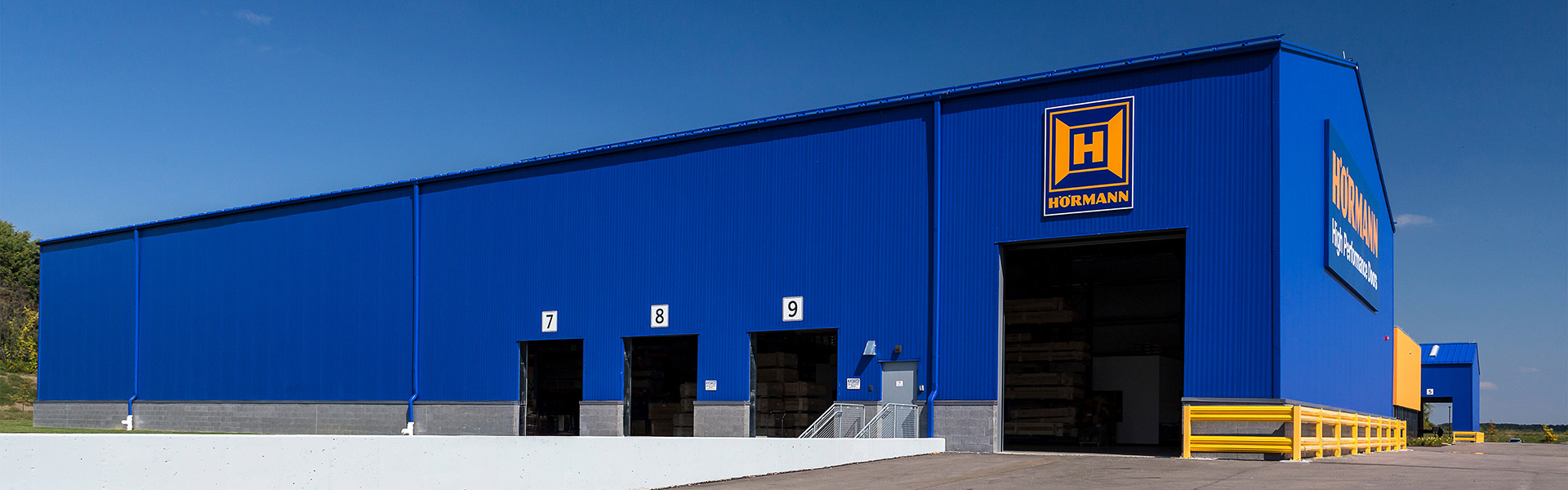
Hörmann – Manufacturing Facility
A global corporation expands manufacturing operations with a Butler building system that supports production, efficient workflow, daylighting and future growth while meeting the parent company’s standards.


Project
Overview
Hörmann, one of the world’s largest manufacturers of doors and loading dock equipment outside the United States, had outgrown its Pennsylvania facility after doubling production in three years.
The company needed a new structure capable of supporting straight-line production, office space and long-term expansion while reflecting the precision and identity of the Hörmann brand.
A Butler Builder® with decades of commercial construction experience recommended a Butler building system to meet the performance and scalability requirements.


Hörmann adopted the Dynamic Building’s recommendations after seeing the advantage of designing for future investment from the start.
“Dynamic Building presented a plan for a great building that would meet our needs. With Butler, we were able to look to the future and construct a building that could take future investments into consideration,” said Dr. Mark Haley from Hörmann.
To ensure alignment with Hörmann’s global standards, Dynamic Building partnered with both a Pittsburgh-based architect and a German corporate architect to translate brand expectations into a U.S. facility. This included exceeding local code requirements for roof and wall insulation, and maintaining strict material handling practices to support LEED certification.
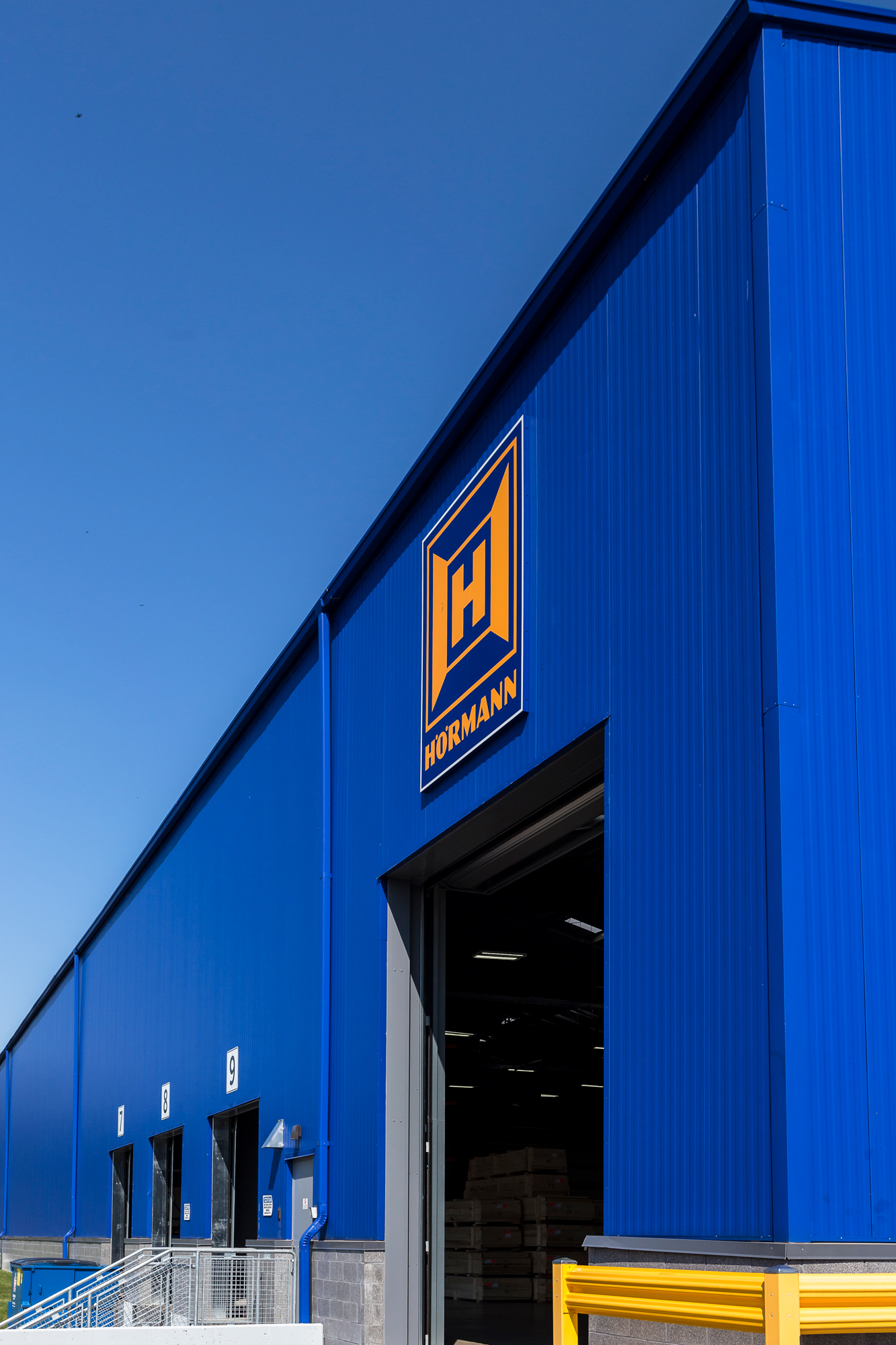
Preserving Hörmann’s corporate identity was essential, and Butler supplied exterior panels in a custom Hörmann blue.
“It really stood out that Butler was able to get a special color panel for us. Hörmann blue is a very distinctive blue color, and we appreciate the effort Butler made to help us represent our brand,” Haley said.
The facility was also engineered to create a better working environment for employees. A daylighting system introduced extensive natural light across the production floor, reducing the need for supplemental electrical lighting and improving comfort.
“We made daylighting recommendations to meet the vision for the great working environment outlined by Hörmann,” Bill Kronstein of Dynamic Building explained. “It’s great that Hörmann anticipates financial savings due to the reduced need for electrical output and that their employees have a better place to work as well.”
It really stood out that Butler was able to get a special color panel for us. Hörmann blue is a very distinctive blue color, and we appreciate the effort Butler made to help us represent our brand.
Operational efficiency also advanced significantly. Straight-line production is now supported by high-speed Hörmann doors at each end of the workflow. Trucks enter through one automatic door, materials move directly via crane to the line, and finished goods exit through another high-speed door. This streamlined layout reduces movement, limits heat loss during winter and maintains controlled interior conditions.
Designed as Phase 1 of a multi-phase plan, the building establishes a framework for expansion as business needs grow.
“The building is designed as Phase 1, but we can, and will, move to Phases 2 and 3 with Butler as we grow. Thanks to the Butler building system, that expansion process will be consistent, efficient and provide good value for the cost.” Haley said.
The result is a facility engineered for reliability, brand continuity and future growth — an intentional investment in long-term performance supported by Butler’s proven building systems.


