


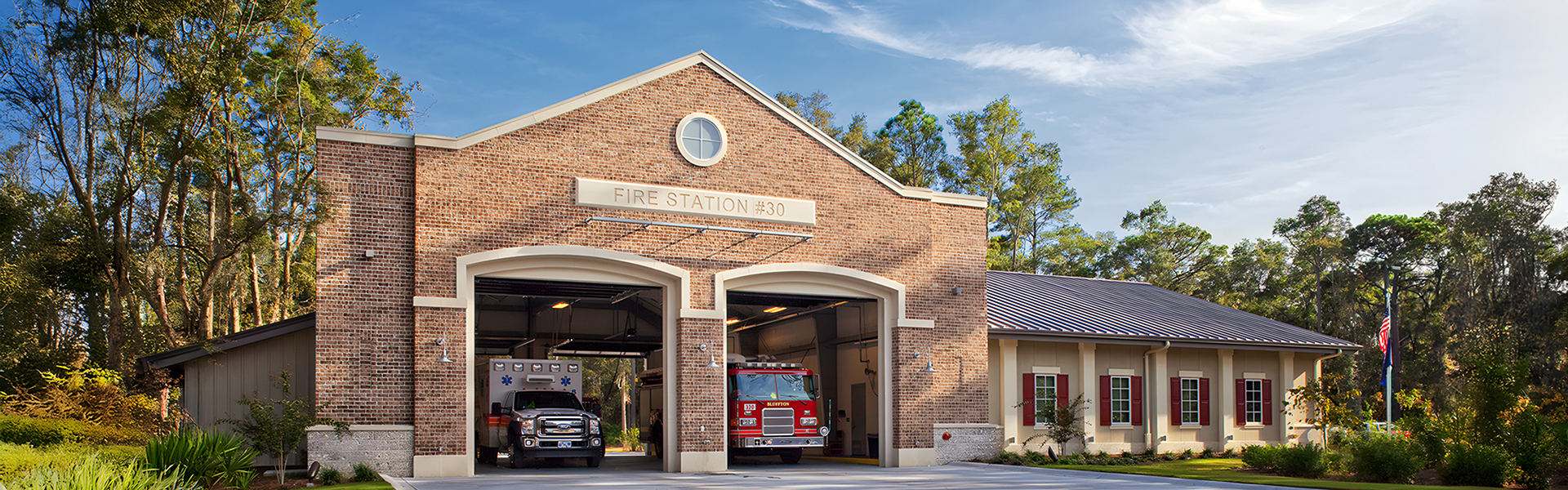
Bluffton Township Fire Station
A Butler Builder® delivers a durable, expandable fire station built for coastal conditions that meets operational needs today while enabling future growth across the district.


Project
Overview
Bluffton, S.C., is a community balancing rapid growth with a strong commitment to historic preservation. It also faces the challenges of coastal weather, corrosive salt air and annual hurricane risks.
When the Bluffton Township Fire District set out to build a new downtown station, it needed a structure that delivered long-term durability, operational efficiency and architectural relevance — without losing sight of taxpayer expectations.
Working with Fraser Construction Company LLC, a Butler Builder®, the district developed Fire Station No. 30 as a facility designed to perform for decades while fitting naturally into Bluffton’s historic core.


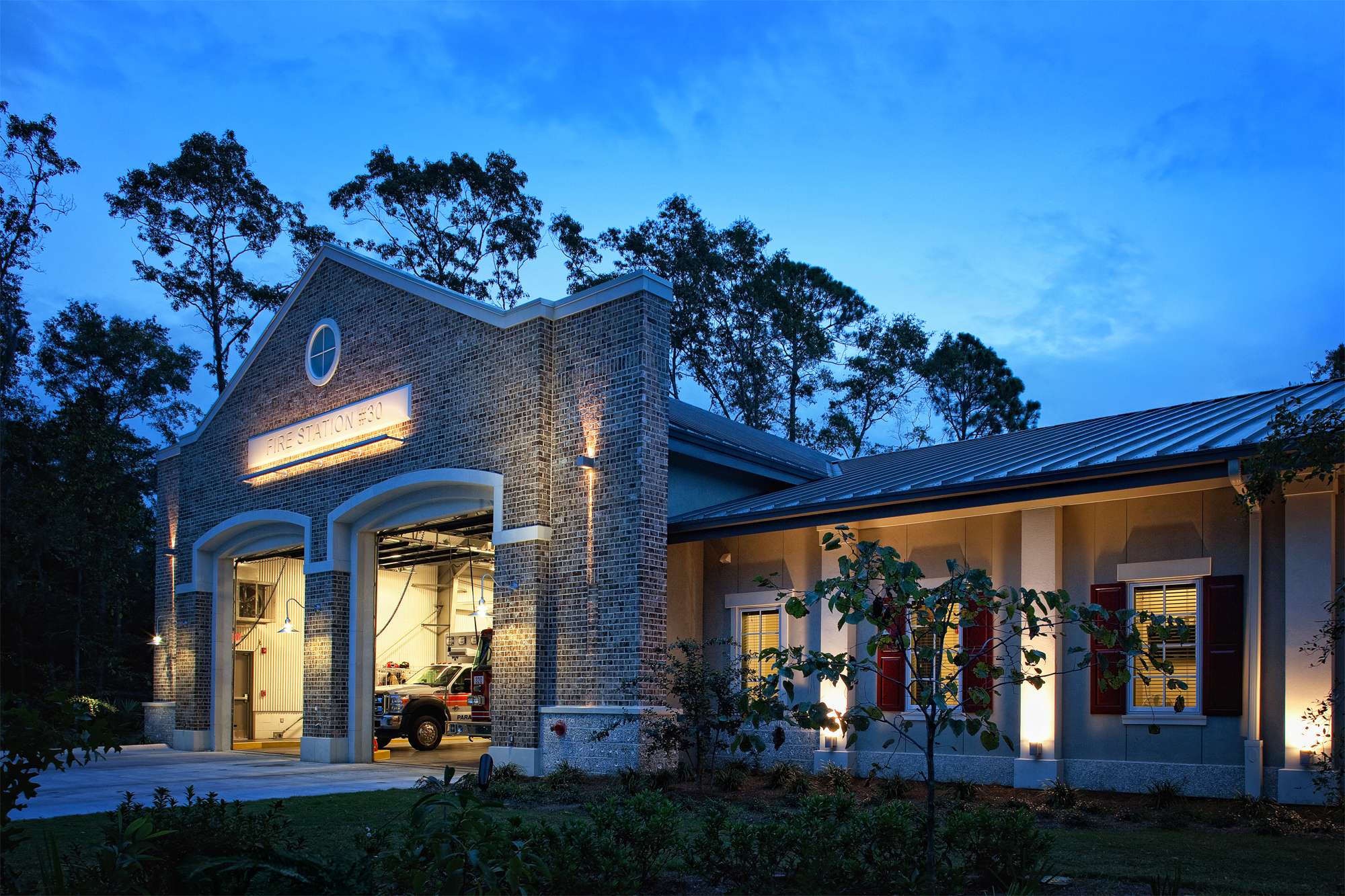
As Fire Chief John Thompson explained, “We wanted a building that was timeless — that could stand for 50 years and still fit with the historic look of our downtown area. Thanks to Fraser Construction and Butler Manufacturing, we definitely achieved that goal. We’ve received a lot of positive comments from the community.”
This project was the district’s first experience with the design-build process. Thompson recalled how effective that approach became once Fraser unified the team from the outset.
“We really liked the process. From day one, Fraser Construction brought together the architects, the landscape designers and all the other people critical to the project. We’re happy they brought the Butler system into the design.”
That integration helped ensure early alignment on functionality, durability, expandability and cost-efficiency — the core needs driving the project.
Fire Station No. 30 required large, unobstructed drive-through bays capable of housing a 38-foot firetruck, an ambulance and a utility vehicle, along with living and support spaces for six on-duty emergency responders. The clearspan structural system delivered the column-free spans needed for equipment maneuverability, while Butler’s hybrid building solutions supported a flexible, efficient layout for the kitchen, dining area, fitness room, captain’s office and individual sleeping quarters. Every component was selected to reinforce long-term value and operational readiness.
We wanted a building that was timeless — that could stand for 50 years and still fit with the historic look of our downtown area. Thanks to Fraser Construction and Butler Manufacturing, we definitely achieved that goal. We’ve received a lot of positive comments from the community.
Bluffton’s environment added another layer of complexity. Although the town sits 15 miles inland, salt-laden air travels directly from the Atlantic, accelerating corrosion. Hurricanes remain a constant threat, and the new station serves as a critical hub for regional response.
The district required materials engineered to withstand winds up to 140 miles per hour and resist long-term coastal wear. The 24-gauge VSR II™ architectural roof system provided a proven solution, offering weathertight performance and up to two inches of thermal movement to reduce stress on the assembly. Concealed movable clips secured the panels while allowing the necessary expansion and contraction. The Butlerib® II wall system further strengthened the building envelope with 26-gauge panels and deep corrugation for added durability.
Future expansion was also a priority in a region experiencing rapid population growth. Bluffton serves 50,000 people in unincorporated Beaufort County and more than 13,000 residents within the town itself. To support long-term needs, the district planned the station as a scalable structure.
As Jay Fraser explained, “Most of the building is covered with finishing brick and stucco, but at the end of the emergency equipment storage area we left the exterior wall unfinished. With the Butler system, we can easily add a third apparatus bay. The ground is already leveled and ready to go.”
The district also envisioned Fire Station No. 30 as a prototype — an adaptable model that could be replicated in other service areas with varying architectural guidelines. Butler’s flexible systems made that approach both practical and efficient.
For the firefighters who work there, the finished station represents more than a facility; it reinforces morale and pride in their mission.
Thompson noted, “The building really helps maintain department morale and keeps people motivated, especially for our younger firemen.”
Built with intention and engineered for endurance, Fire Station No. 30 stands as a long-term asset for a community committed to both growth and heritage.


